Norm Writes
  • Home
  • Who in the World
  • Blog
  • Postcards
  • Why I write

New book, 'Cambodia's School of Hope,' explores a school that educates and empowers impoverished youth.

5/14/2014

2 Comments

 
Picture
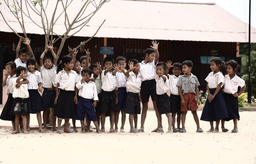
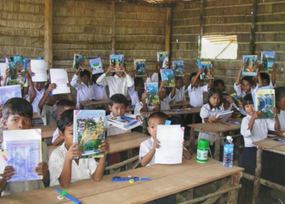
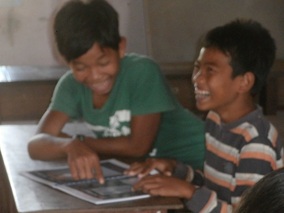
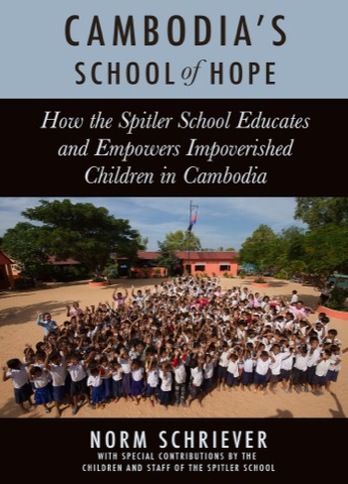
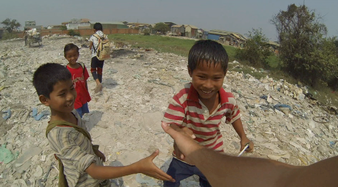
I'm proud to announce the release of the book, Cambodia's School of Hope, a collaboration effort between myself and the children and staff at the Spitler School in Siem Reap, Cambodia.  The story of how the school came to be, and what they're doing to educate and empower children in poor Cambodia, is truly remarkable.  Read about it below and grab the eBook on Amazon.com.  We'll have a print version available soon.  100% of profits from book sales are going directly to keep funding this kids' educations!  

Thank you in advance for your support and caring about these kids!

-Norm  :-)


***
Cambodia's School of Hope.

A chance meeting in an exotic land on the other side of the globe.  A local guide trying to raise money to build a well in his poor village.  Hundreds of Cambodian school children who didn’t have a school to attend, or sometimes enough food, clean water, or medical care.  

What unfolded next is truly amazing.

The story begins in April of 2005, when Danny and Pam Spitler visited Siem Reap, Cambodia to see the famous temples of Angkor Wat.  During their four-day visit to the area their tour guide was a young Cambodian gentleman by the name of Chea Sarin. Over the course of their visit, it became clear that he cared deeply for the plight of the poor villagers in his country and especially for the children.  He told the Spitlers that the lack of clean drinking water was the cause of many health problems among the village children.

At the end of their tour the Spitlers decided to donate enough money to provide one of these wells to a poor village.  Sarin sent them photos of the well being built and then when it was finished.  A few weeks later, Sarin asked them if they would consider helping him start a school at a very poor village located about nine kilometers outside of Siem Reap.  The Spitlers agreed. 

The initial concept was to build one building, using lumber and thatch construction, with a dirt floor.  The building would be divided into two classrooms in anticipation of about 60 students.  With a construction budget of less than $1,000 Sarin was able to complete the building in just a few weeks and had money left over to build some rudimentary wooden tables, which the students could use for desks.

To the surprise of Sarin and the Spitlers, almost 100 children signed up to attend the school.  Classes began in July 2005, and additional students continued to arrive, and soon the school was serving 120 students by offering half the students classes in the morning and the other half in the afternoon.  Sarin was able to purchase supplies for the students and the classroom at an average cost of about $1 per student per month, and two well-qualified teachers were hired for salaries of $70 per month each.

Given the response from the village, the Spitlers decided to provide additional funds so that Sarin could build two more buildings and hire four additional teachers.   Sarin accomplished all of this within six weeks and when the school opened for the regular school year in September 2005 the school was able to accommodate 190 students in kindergarten through second grade.

Over the years, the Spitler School has continued to flourish and grow, and now a second school, the Kurata School, is open.  Thanks to Sarin, the Spitlers, the Spitler Foundation, and donors and volunteers from all over the world, over 800 children are now being educated and given a better chance to get out of poverty.  The school also undertakes many community projects like building roads, delivering food, trash pickup and recycling, and medical advocacy for the children.

The Spitlers and Sarin have been recognized as widely as the Cambodian government and the U.S. White House for their efforts but they do it all to give these children a brighter future, not for any accolades.  What started out as a chance meeting between strangers from different parts of the world turned into something so meaningful and special to so many people – Cambodia’s school of hope.

This book tells the story of the Spitler School and looks into the lives of the children who attend, their families, their village, and the beautiful, yet challenged, country of Cambodia. 

100% of the profits from this book are going directly to the Spitler School Foundation to help these children. 
2 Comments

When you travel, is it wrong to take photos of people living in poverty?

3/18/2014

0 Comments

 
Picture
I recently met a new friend in Cambodia, a very kind and conscious American woman from Denver who is traveling in Southeast Asia.  She asked me a question so insightful I had to write a blog to answer it properly.  Here is her inquiry, paraphrased:

When I travel to poor countries I rarely take photos of people. I see so many art shows with photographs of the impoverished but it seems these people are no longer sentient beings - they become impersonalized backdrops at dinner parties, objectified as oppressed beings.  I struggle with this.  How do you feel when you photograph people who live in poverty?

Here is my answer:

First off, great observation!  I think about that all the time as I travel or live in Third World countries and photograph people, many of them living in desperate poverty.  I ask myself, “Am I just being a tourist in their suffering?  Am I one of those people taking photos who think, ‘Oh look at all the starving dirty people in hovels - these pictures of their suffering will look great on my Facebook!  My friends back home will think so highly of me.  I feel SO good about myself for taking an hour out of my day to go visit their slum/orphanage/village, and now that I’ve got the photos I can go back to my air conditioned luxury hotel.’"

My answer is always “Hell no!” but that’s the stark reality of too many tourists I see.  A while back I even read an article about a South African hotel that was replicating the impoverished shanty experience.  They weren’t bringing people into the shanty towns to let them experience a small part of the life of the poor, but were mocking it by building their own shanties complete with a few high-end amenities, right on the hotel grounds.  That’s just dead wrong.  But what about the casual traveler who can’t help pulling his camera that costs more than the local people in his finder make in two years? 

So much of photographing people as you travel comes down to your intentions, but you also have to communicate that intention, often within seconds and without words.  I travel into some of the most impoverished areas in the world and take photographs without conflict or any problems with the locals.  In fact, when I leave I’ve spread good will and hopefully helped them in some tangible way…AND still got authentic photos I’ll cherish.  How do I do that?

1. When possible, I ask people if I can shoot a photo of them.  Of course that loses spontaneity but if we've already made eye contact, said hello, or they see me, I'll smile and ask politely if I can take a photo, and then thank them profusely afterward.  It may not sound like much, but it shows respect when you ask permission.

2. Many times I compensate them - a dollar here or there for taking their photo and sticking my nose and camera into their business.  They’re always appreciative of that, no matter what the amount. 

3. I ask myself how I would feel if someone stuck a camera in my face at that given moment.  If I was eating dinner with my family or worshipping or in a compromising position then I might construe it as rude, but generally if someone is kind and interested in me as a human being, not just a an object for a photograph, then I’d be happy to have them document our connection. 

4. Sometimes I take photos with them, not just of them.  Once we’ve said hello, exchanged a smile or a laugh, and it feels appropriate, I’ll ask if I can take a photo with them, side by side as new friends.  I’ve always found people to be honored and excited to be seen as such. 

5. More than anything, I try to use the photo and my experience in their homeland to help them.  I do that by writing about their lives, telling their stories to the world.  Whether it's a blog, a fundraising campaign, or a whole book about their existence, that's my way of creating awareness for who they are and what help they may need on a bigger scale.

6. I educate myself about their country, the conditions of their lives, and the social ills affecting them, and then always make a donation before I leave.  Instead of giving money to beggars on the street (which is often counterproductive by encouraging more begging and exploitation of children) I make a donation directly to a credible charitable organization that’s serving them.   

7. Lastly, I smile and try to show love and respect to anyone I meet, regardless if I photograph them or not.  I think it's so important to do that - my way of showing that I acknowledge them as fellow human beings and equals.  Everywhere I’ve gone, I’ve found that respect and friendship are commodities just as powerful as money.

***

-Norm   :-)

0 Comments

Why am I helping fund a book project at a poor school in Cambodia?

2/2/2014

0 Comments

 
Picture
To answer, let me first introduce you to the Spitler School, a private elementary school in the rural village of Ang Chagn Chass outside Siem Reap in rural Cambodia, founded and funded by an American businessman and a great Cambodian social worker.  The children in that village are very poor like most kids here, and without the school most of them would be in the fields working instead of getting any sort of education.  To illustrate just how important this school is, let me give you a few statistics about child poverty in Cambodia:

  • About 66% of the country lives in poverty and over one third of the population lives below the desperate poverty line, defined as 45 cents a day.
  • More than 50% of people in Cambodia are under 21 years old.
  • The number of street children in Cambodia is increasing at a rate of 20% per year.  They are often forced into begging, crime, or the sex industry.
  • A large portion of children between the ages of 5 and 17 are already working to survive, nearly 700,000 in a country of 14 million.  Of those, nearly 75% of them have dropped out of school.
  • Almost 40 percent of children in Cambodia are malnourished, often just existing on a couple portions of rice a day.
  • Girls always suffer the worst from the effects of this poverty and lack of societal safety net, as they basically have no opportunities in life if their basic education is discontinued.  

Picture
But here’s the great news – there is a proven, direct solution to improve their circumstances almost immediately and start reversing the cycles of desperate poverty!  It’s been shown time and again, all over the world, that educating and empowering girls first, and then women, is the best way to improve the quality of their lives, the lives of families and then whole communities.  The problem is daunting but the solution is crystal clear and well within reach!

So what are we doing about it?  
With your help, we're putting together a book with stories and essays (in Khmer and English) and photos and drawings by the kids.  We’ll also add information about their lives, the village they live in, their school, and Cambodia.  It But instead of just printing out a few copies and pass them out to the kids, we’re going to self publish the book and sell it via Amazon.com online, in both print and eBook formats. 

That means the world will know these children’s stories, and these children will have direct access to an unlimited international audience, changing their lives and broadening their possibilities forever.  All of the money from book sales will go right back to funding the Spitler school and the children’s continued education in perpetuity.  We expect this to become a yearly project and hope to expand to other schools and countries, giving kids all over the world a chance to stay in school and gain the education needed to nudge them out of poverty.

Picture
To get started, I am trying to raise $5k to cover the nuts and bolts of the project – like publishing  costs, printing, transportation, research expenses, and producing the book as a legitimate published commodity that we can sell worldwide.

How can you help?  
Please watch a short video about the school, read more, or make a humble donation at:

http://www.gofundme.com/6l1pbk

0 Comments

Check ignition and may God's love be with you.

1/28/2014

1 Comment

 
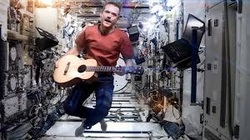
Canadian astronaut Chris Hadfield was weightless, floating in the zero gravity environment of the International Space Station 200 miles above the surface of the earth.  If spending 5 months in the space station and posting videos about everyday life up there wasn't vanguard enough, what the 53-year old Hadfied did next came to capture the hearts and imaginations of millions of people back here on earth:  

He pulled out a guitar and sang “Space Oddity,” by David Bowie.  In space. 
Picture
His acoustic guitar floating with him, Hadfield’s well-rehearsed version did falsetto justice to the Bowie original:

“This is Major Tom to ground control,
I’m stepping through the door,
And I’m floating in the most peculiar way,
And the stars look very different today…”

At face value, the 1973 hit by iconic rocker David Bowie was a futuristic sci-fi ballad about Major Tom, a lone astronaut in space, but the deeper themes are about exploration of the human condition, the courage to be different, and the conflicting emotions of the detachment it takes to truly be free in this universe. 

Of course Hadfield left out the part where Major Tom reports problems to ground control, and even inserted his own name in the song a couple times.  Since its release and worldwide popularity, the whole team successfully came back to earth and Major Tom, err Chris Hadfield has retired from the space program, as planned.  Just like in the song Major Tom makes it back to earth and is celebrated by the press and his fans as a hero, but the real reward was a few solitary moments orbiting the earth and the view from the dark starry heavens that belonged only to him.  

My friend told me about this video last night and I was immediately moved by both the vulnerability and depth of it.  Coincidentally, I began listening to Bowie’s classic a few weeks ago as I write as an eerily-dreamy reminder that no one ever accomplishes anything important by keeping their feet on the ground.  

What really fascinates me is how unique Hadfield’s solo-above-the-stratosphere truly is.  He did something that no one, and I mean NO ONE, in the history of the earth has done.  That’s remarkable when you consider the thousands of years of mankind’s modern history and the fact that there have been 100 billion people on earth.  Think about that – there are infinite possibilities to create, to do something different, to be the conscious ground control in the mission of our own lives.  As time goes on you’d think that we as a race of artists and dreamers and explorers had LESS ideas to launch, but instead inexplicably we have more, exponentially it seems.  What a pure, weightless experience; to summon the courage to be an innovator and let your imagination soar into its own orbit.  Art, writing, music, creation, ambient knowledge - they keep expanding into previously dark and empty corners of our existence to give us warmth.  The democratization of ideas, our social web of conscience, people helping others a world away who they’ve never seen and will never know - interconnectedness like never before.  Somehow the world is getting bigger and smaller at the same time, spinning out of control but also hugged tightly by a gravity much bigger than ourselves.  

I can only conclude that it’s our nature to keep launching into the unknown of the human psyche, just to test how far our light may spread while others look up and pray for our safe return.  This song, a soul floating in the atmosphere of endless possibility, Hadfield’s cold, silent journey a little bit farther into our humanity, somehow all encompass the best of our collective spirit, a spirit that is, by definition, exactly as vast as anything and everything we don't know, an idea so beautiful it makes our tears flow up.  

Well done, Major Tom.

-Norm  :-)
1 Comment

This Cambodian elementary school is striving to make a big difference.

1/17/2014

2 Comments

 
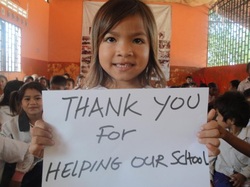
Today I had the opportunity to check out the Spitler School, a fully donation-funded elementary school for the children of the very poor village of Ang Chagn Chass.  Before this school opened in 2005, the children of these subsistence farmers couldn’t go to school because the only free government school was too far away.  But that all changed when  an American couple, Danny and Pam Spitler, successful businesspeople from Arizona, came to Cambodia on vacation.  Their tour guide, Mr. Chea Sarin, was involved with trying to help this desolate village, and together they formulated a plan to open an elementary school.
Picture
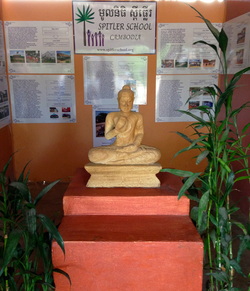
It started humbly – first, they built the latrine, as Sarin told me, and then they dug the well.  Water and sanitation are the most important things here, he explained.  What started out as a one-room bamboo structure and 50 students in 2005 has now grown leaps and bounds to a whole compound with half a dozen nice cement buildings, tin roofs, and a sandy courtyard with trees, flowers, a flagpole in the middle, and plenty of chickens running around.  Thanks to funding by the Spitlers, donations by other foreigners, and tireless work by Sarin, the school new serves about 500 local children grades K through 6. 

They now get a first class education, a huge advantage compared to most of their parents and villagers who have no schooling at all because of the civil war and the need to work in the fields.  The school provides them with one new uniform, school supplies, books, and a new backpack.  I saw plenty of photos of the children holding those gifts on their first day, the backpacks adorned by the Arizona Diamondbacks logo because it was the baseball team who donated them.   Brand new bicycles have also been donated by a corporation and each child who graduates 6th grade receives one of their own.  This is crucial because the only chance to continue their schooling is a middle school 9 km away.  Without a bike to ride there, almost all of the children would drop out and go to working the fields – or be recruited into the sex trade.

They teach the kids the usual subjects here but with a special emphasis on foreign history and English, topics that will help them get jobs in tourism – the only opportunity that gives them a chance of escaping poverty.  The school also instills in them lessons about being a responsible community leader in their village.  

Indeed, when the kids were released from class and filed out the front gate, they were ecstatic to say "hello" and "How are you" and "goodbye" to me in English, huge smiles on their faces.  A few peace signs were mixed in and one little boy even ran back just to slap me a high five.  These kids are friggin' Golden, I'm telling you, and to be able to do one very small thing to help them out and feel the glow of their appreciation was one of the best feelings I've ever had.    

Picture
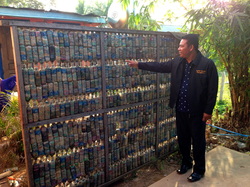
But my warm and fuzzes aside, these folks face some huge problems in their lives.  For instance, most of the people who live in their village are focused on just having enough food and shelter every day, so trash containment is a real problem.  Uneducated and without the luxury of making smart environmental choices, most of the villagers just dump their trash in fields or rivers or by the side of the road.  So the school teaches the children a better way and has each of them collect a quota of discarded water bottles and plastic bags.  They stuff the bags into the bottles and then affix them to a wire frame, forming the internal structure for a wall that can be cemented over.  

They also get involved with rebuilding local dirt roads because during the rainy season everything floods and the roads get washed away, prohibiting everyone’s access to town.  While I was there I made a humble donation to the school, which Sarin explained could be used to finish building the playground, which was just a bumpy dirt lot because they’d ran out of money to continue construction.The kids only attend school half days so there are no meal programs (and not enough money to fund them, anyway) but they do enlist the local children’s hospital from Siem Reap, the next big town, to come give checkups to the kids once a year.  It costs them $1 per child but for most of them it’s the only medical care they’ll ever get.  

Many of the kids need pills and medicine because they have parasites. He explained that most of the villagers had only simple one-room huts without even outhouses.  So people just went to the bathroom in the bush.  The problem is that during the rainy season everything floods and the sanitation of the rivers and creeks is compromised, which all mixes in with bathing water and even drinking water if they don’t have a well.  The children are barefoot so they end up walking in the water and get ringworm and other parasites often.  It costs only $300 to dig a new well, but most families will never see that much money on hand in a lifetime.  

Picture
Sarin, raised in an orphanage and then a refugee camp when he was young after his father was murdered by the brutal Khmer Rouge regime’s genocide, was only able to learn English and become a tour guide because Buddhist monks took him in and gave him an education.  He is now married and has two beautiful children who will never know hunger or want for anything.  His life’s work, and that of the school, is to empower these children through education so their lives might be better, too. 

So the school isn’t just about giving these kids a basic education but the only lifeline most of them have to the outside world.  It gives them hope, laughter, joy, self esteem that they can have dreams and accomplish something in their lives.  It’s all at once the center of the village, a sanctuary for their youth, and a chance to heal the community who’s scars run deep, but who’s future will be better because of the warmth of the Cambodian people and the generosity of strangers. 

If you'd like to get involved or help out, visit their website at: http://www.spitlerschool.org/
Or drop my an email any time [email protected]

Thanks so much everyone - this means a lot to me.


Norm  :-)


2 Comments
Forward>>

    RSS Feed


      Receive a digital postcard from Norm every month:

    Yes, I want a postcard!

    Don't miss Norm's new book,
    The Queens of Dragon Town!

    See More

    Norm Schriever

    Norm Schriever is a best-selling author, expat, cultural mad scientist, and enemy of the comfort zone. He travels the globe, telling the stories of the people he finds, and hopes to make the world a little bit better place with his words.   

    Norm is a professional blogger, digital marketer for smart brands around the world,  and writes for the Huffington Post, Hotels.com, and others.

    Check out South of Normal his Amazon.com best-selling book about life as an expat in Tamarindo, Costa Rica.

    Cambodia's School of Hope explores education and empowerment in impoverished Cambodia, with 100% of sales going to that school.

    The Book Marketing Bible provides 99 essential strategies for authors and marketers.

    Pushups in the Prayer Room, is a wild, irreverent memoir about a year backpacking around the world.  

    Follow Norm on Twitter @NormSchriever or email any time to say hi!

    Categories

    All
    Advice For Writers
    Amazon
    American Exceptionalism
    Anthropology
    Asia
    Backpack
    Basketball
    Best Seller Lists
    Blogging
    Book-marketing
    Book Review
    Book Reviews
    Cambodia
    Charity
    Child-poverty
    Cloud 9
    Communications
    Costa Rica
    Crazy-asia
    Culture
    Dumaguete
    Education
    Environment
    Ethics In Writing
    Expatriate
    Favorite Song
    Festivals
    Fraternity
    Funny
    Future
    Geography
    Give A Photo
    Giveaway
    Giving Back
    Health
    Heroes
    History
    Hugo Chavez
    Human Rights
    Humor
    India
    Islands
    Itunes
    Laugh
    Maps
    Marijuana
    Martial Arts
    Memoir
    Music
    Nature
    Nicaragua
    Non Violence
    Non-violence
    Ocean
    One Love
    One-love
    Our World
    Philanthropy
    Philippines
    Population
    Positive
    Positivity
    Postcard
    Poverty
    Pura Vida
    Pushups In The Prayer Room
    Race
    Reviews
    Safety
    San Juan Del Sur
    Science
    Screenplay
    Self Publish
    Siargao
    Social Media
    Southeast-asia
    South Of Normal
    Speech
    Sri Lanka
    Story
    Surf
    Surfing
    Tamarindo
    Thailand
    The Philippines
    The-queens-of-dragon-town
    Tourism
    Travel
    United Nations
    Venezuela
    Work From The Beach
    World Health
    Writers Forum
    Writing
    Writing Forum
    Writing Your First Book

    Archives

    October 2022
    September 2022
    August 2021
    December 2020
    November 2020
    October 2020
    September 2020
    August 2020
    July 2020
    June 2020
    April 2020
    January 2020
    December 2019
    November 2019
    October 2019
    September 2019
    August 2019
    July 2019
    June 2019
    May 2019
    April 2019
    March 2019
    February 2019
    January 2019
    December 2018
    November 2018
    October 2018
    September 2018
    August 2018
    July 2018
    June 2018
    May 2018
    April 2018
    March 2018
    February 2018
    January 2018
    December 2017
    November 2017
    October 2017
    September 2017
    August 2017
    July 2017
    June 2017
    May 2017
    April 2017
    March 2017
    February 2017
    January 2017
    December 2016
    November 2016
    October 2016
    September 2016
    August 2016
    July 2016
    June 2016
    May 2016
    April 2016
    March 2016
    February 2016
    January 2016
    December 2015
    November 2015
    October 2015
    September 2015
    August 2015
    July 2015
    June 2015
    May 2015
    March 2015
    February 2015
    January 2015
    November 2014
    September 2014
    August 2014
    July 2014
    June 2014
    May 2014
    April 2014
    March 2014
    February 2014
    January 2014
    December 2013
    November 2013
    October 2013
    September 2013
    August 2013
    July 2013
    June 2013
    May 2013
    April 2013
    March 2013
    February 2013
    January 2013

Norm Schriever

Email:     [email protected]