Norm Writes
  • Home
  • Who in the World
  • Blog
  • Postcards
  • Why I write

Blue. Green. Breathe.

3/9/2013

1 Comment

 
Picture
The proper word for “the sea” in Spanish is “el mar,” a masculine-gendered noun. However, the fishermen call it “la mar,” making it feminine, because they believe that the sea is a woman. She’ll take care of you, provide for you, even give you life, but if you ever cross her she can unleash a tempest so furious that you might disappear forever. 

The fishermen had it right—the ocean was to be respected, and I called her la mar as well, even though my Spanish-speaking friends always corrected me. She was my refuge, my loving esperanza whom I could spend a few eager hours with every day. The thrill of her company never once diminished.

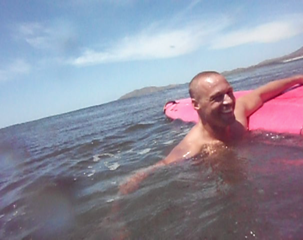
I wasn’t a fast swimmer and I certainly wasn’t graceful, but I plodded along, steadfast, unsinkable, like a tugboat. When I was out there no one could bother me, no one could reach me; it was just me and my thoughts. I’ve never felt as good as the times I was swimming in the ocean. 

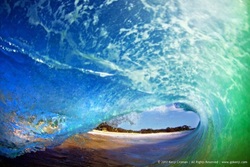
On the surface the water was blue—a thousand points of light reflecting off every crest, blinding if you looked straight at it like trying to count diamonds. But once I dipped my head underwater everything was green—the color of shiny apples. 

Blue. I took a deep breath.

Green. I plunged beneath. Eyes open because I wore goggles, I could see my hands, my arms, and the periphery of my shoulders as I paddled, frog-kicking easily. The sea floor wrinkled like wind patterns in the desert. I could see shells and the horseshoe outlines of flounder hiding on the bottom. 

Breathe. I came up and took in air, the one and only biological imperative at that moment. 

Blue. And then back in, timed perfectly as the crest of the next wave swelled. 

Green. When the sun was overhead rays of light pierced the water and reflected off the bottom, an explosion of glass suspended in time.

Breathe. 

The sheer magnitude of the ocean was hard for me to comprehend. It went on and on forever. And the waves? Where did they originate? I guess the technical answer is off the coast of Japan—the Kuroshio Current swirling counterclockwise south of the equator, pushing up against the cold water Aleutian Current from the north. The result is that the water off the Nicoya Peninsula, where Tamarindo sits, is an average of 82 degrees year-round, bathwater. As long as I kept moving I wouldn’t get the slightest chill, even if I stayed in there for hours. 

Blue,

Green,

Breathe.

I thought about how human beings have explored the cosmos even more than the depths of our own oceans, and yet water covers 71% of the earth. The Pacific Ocean alone covers a third of the Earth’s surface, far greater than the size of all the continents jammed together, with an extra Africa to spare. 

Blue,

Green,

Breathe.

The deepest point, the Mariana Trench, is 6,000 fathoms deep, over 36,000 feet. If the Mariana Trench were a mountain instead of at the bottom of the sea, it would be on the edge of where the troposphere turns to the stratosphere—what we call “space.” Unbelievably, there’s life down there, somehow able to withstand the massive pressure and live in an environment where a beam of light has never once penetrated. 

Blue,

Green,

Breathe.

Zoom upwards at 1,000 miles an hour to the surface and my act of swimming was basically skydiving into liquid sky, a subtle tweak of elements the only difference between liquid and gaseous form. When I floated on the surface, it was like I was suspended somewhere between free-falling out of the plane and the ground far below. I was swimming in sky, or flying in water, depending how you want to look at it. 

Blue,

Green,

Breathe.

There are enough natural resources in our oceans: food, minerals, and energy ready to be harnessed, for every human being on Earth. It’s teeming with life, an energy force so big and ancient that it’s hard to deny that the ocean isn’t just a host for organisms, but an organism itself, possessing a soul. Why not? If a 300-year-old tree in the rainforest has a soul, if something as small and fleeting as a human being has a soul, then who can deny that la mar possesses a universal spirit that we can’t even comprehend. 

Blue,

Green,

I tried to wrap my mind around the idea that the wave coming toward me was all the way on the other side of the Earth just a week ago. It traveled all that way just to meet me, at this very place and time. Or maybe I spent my whole lifetime getting to this exact point so we could come together. Did I create that destiny? Or did something else? 

Breathe. 

I put my warm and fuzzies on hold because I was in the kill zone, so I needed to focus. I’d learned to duck-dive the waves—paddling straight into them and diving into their face, cutting through them to negate the tons of kinetic energy that each wave was eager to deliver straight down on my head. I knew that coming back through the foam in the kill zone would be harder; sometimes the tide turned against me or I’d be fatigued, so the same swim to shore would feel like twice the distance. 

If I mistimed a wave I’d find myself paralyzed in the trough, staring straight up at a curling wall of water. If that happened, I knew what to do: 1) form a cannonball, protecting my head and the back of my neck in case I get dragged over rocks or a sharp reef, 2) take a deep breath, 3) pray.

So to get through I looked for the sets, groups of waves that came in sevens, according to an old surf legend, but in reality the number of waves depended on the storm that formed them. When I saw a break, a temporary calming in the sea, I swam hard, abandoning my breaststroke for freestyle to gain speed, hoping that my timing was right and my shoulders were strong enough to make it through. 

When a big set came in I swam straight up the pitch of the wave and did a barrel roll at the top, like an aikido move to diffuse all of that force, just enough to let it spin me skywards. I had fun, flip-kicking like a dolphin and swimming along the exact parallel where the waves broke so I was continuously high on their crest. I even tried doing flips off the back of the waves, but usually I got only halfway around before performing a comical wipe out, straight down into the valley of the next wave like I was jumping into an elevator shaft. When the wave broke and crashed it sent a mist of sea into the air, falling back down on me like drops of rain. 

Past the kill zone I paddled in another world where it was tranquil, the horizon rising and falling gently like the belly of a sleeping dinosaur. Everything was still. It was nothing but me and the sun and a gentle wind stirring big blue. Pelicans swooped down, unbothered by my presence, snapping at the flying fish that broke the water’s surface. The bigger the waves, the more determined the pull of the current, the more I’d feel at home once I’d earned my place behind them. No matter how many times I swam out there a jolt of electricity pulsed through my body, appreciation so vivid that I had to suppress a yelp. 

Surfers waited in the lineup around me. They sat on their boards, gazing west to assess the incoming sets, perfectly balanced so the tips pointed out of the water. I imagine that those times were golden for them. When they saw the right waves starting to form farther out, they began the instinctual paddle and effortless spin to gain velocity. As the giant awakened beneath them there was a perfectly choreographed dance, lasting only a second or two, where they paddled hard, sprang into a crouch like a jungle cat, and  dropped in at exactly the right time and speed—in perfect control to take the ride. 

There were no other swimmers out there with them but they didn’t seem to mind my presence. Surfing is a closed culture, but a single loco swimmer was no threat, and a rare site. I might recognize a friend from town and say hi, and they’d flash me the shaka sign. Still, I gave them space, circling far enough around and conscious if the curl was going to carry their next surf left or right. 

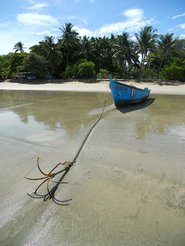
I swam even farther out, to the school of fishing boats, vacated for the afternoon and anchored in a floating ghost yard. It was silent except for the sounds of rope straining and water lapping against the peeling hulls. 

I tried to count my strokes as I swam farther out past the boats, but lost count after a few hundred. I stopped and treaded water, looking around and realizing where I was: completely helpless, defenseless, and almost immobile, having to keep moving to stay afloat. There wasn't another person within earshot. What I’d basically done was take myself out of my natural habitat, where evolution gifted me with natural faculties to aid my survival, and fully immersed myself in an opposite habitat—traded oxygen and dry land for suspension in unbreathable liquids. I was, so to speak, a fish out of water. It was one of the worst physical predicaments a human being could put themselves in, so why did it feel so damn good? About 257 things could go wrong and only one thing could go right—I made it back to shore safely—so why did every pulse of my nature call me out there? 

I shared the Pacific with countless life forms: whales, eels, crocs who’d wandered out, stingrays, barracuda, poisonous jellyfish, seas snakes, turtles, and every kind of fish imaginable. But I thought about sharks. It wasn’t a matter of IF they were there, but HOW CLOSE they were. Every time I swam out into the ocean I voluntarily inserted myself into the food chain—and unnervingly low on the ranking.

Big White, the Landlord, Man in the Gray Suit, Greg Norman, the White Death, Mac the Knife. Sharks. I was out there in the open like an unsuspecting white mouse dropped into a boa constrictor’s cage. The thought tensed me with fear, bringing fatigue to my shoulders and neck as I treaded water. 

I kept swimming. I was just being silly, I tried to reason. Cramping or being smashed by a rogue wave in the kill zone, drowning only meters from the shore, were far greater risks. The chances of getting killed by a shark were infinitesimal, only 1 in 11 million worldwide. But then again, that statistic factored in people who lived in Kansas and never even saw the ocean, and there were seven shark attacks for every death. What were the odds for people who lived in Costa Rica, on the beach, who swam deep into the ocean, by themselves, every day, and who’d had fish sticks the previous night for dinner? And how many of those attacks were never reported, either because there wasn’t enough of the victim left to confirm or because they were locals, so no one bothered? Gulp. 

There was nothing to do but surrender. I loosened up and kept paddling, calming my breath. If a shark wanted me there was nothing I could do to stop him from biting me in half. Anyways, it would be sort of cool to have a little run-in with a shark, to get a tiny nibble and end up with a scar. Just an itty bitty one, in a convenient place, like on my upper thigh, so it would give me yet another excuse to take down my pants in front of girls in bars. If I could arrange to get bitten by a very mellow vegetarian shark with a massive overbite, that would be ideal. It would be just a scratch really, but instantly I’d be part of the Shark Attack Survivors’ Club United (Against Sharks), an esteemed fraternity if there ever was one. My SASCU(AS) card would even get me a discount at sushi restaurants. I could get down with that. 

Surrender. There was no way to hold onto my fear, my anger, and swim long distances at the same time. The tension in my body, in my mind, would turn it into a mechanical struggle. But if I loosened up and just concentrated on the few things I could control—my breath and the consistency of my stroke—then I relaxed into it, acceptance washing over me.

Blue,

Green,

Breathe.

Acceptance. I reflected on that word and deepened my breathing. I was so tired of fighting against everything in my life, of always swimming against the current. When I was young I felt trapped, alone, like I was born into in a red room with soundproof walls. None of it made sense to me—the pain, the injustice, the random dice game of suffering in the world. When I was younger I so desperately wanted to reach behind the clouds and shake sanity into God, but no matter how hard I looked, I couldn’t find him. 

Blue,

Green,

Breathe.

Sometimes I swam so far out that the beach looked like a postcard, the people little flecks of a severed former existence. As the sun neared the horizon that fresco sky folded over itself like a mural on fire, pink and orange and purple melting all around me, sagging toward the contour where the ocean met the heavens. I wanted to keep swimming out, to go deeper, swim until I couldn’t see land anymore. How far? How far was too far to get back? I’d just keep going and let the sunset take me. That is how I wanted to end, to go to my peace. 

Blue, 

Green,

Breathe.

But if I could manage to collect enough moments like these, then life might just be worth living. Maybe, if I could learn to surrender, and accept, I might open up my soul enough to let something better in, and then the whole ocean could drown within me. Then it would be all right. Yeah, I wasn’t ready yet. I turned around, the sunset at my back, and headed in.

Blue, 

Green,

Breathe.

I had a long way to go to reach the shore. By then I should have been fatigued, but the swim back was effortless, like I was holding still while the earth was spinning toward me, fate’s gentle conspiracy to bring me home. The dying sun felt good on my back. 

Blue, 

Green,

Breathe.

I realized that most of the problems in my life were from going too fast. Most of my defeats occurred only within my head. I used to stir up the waters, looking furiously for something, and then gaze down in frustration, wondering why it wasn’t clear.

Blue, 

Green,

Breathe.

But if I’d been my own jailer, then only I possessed the keys to my liberation. 

Blue,

Green,

Breathe.

So with each headfirst plunge into the next wave I released the flotsam and jetsam of my negativity, the hurt and anger and guilt that had been my anchors to drag for so long. Each breath was a silent prayer of healing cast it adrift, like messages stuffed into a bottle and floated into the endless ocean. 

Blue,

Green,

Breathe.

I imagined all of those bottles floating behind me, drifting in the presence of that silky mistress the ocean, night and day, thousands of them, more than one could count. Eventually, they’d wash up on a lost tropical island, clanking and shimmering onto the beach, thousands of miles east of that very spot in the Pacific where a man had been shipwrecked, living wild and alone for almost 40 years. One by one, he’d collect them and pull out the messages, unfolding and reading each one. At first his face would register confusion. But as he read more he’d form a serene smile, then throw his head back and laugh, tears of joy in the presence of God who he’d final found: that mother, la Mar. 

For they all read, every single one of them, going on forever:

I am free. I am free. I am free. 


 Tamarindo, Costa Rica, surf, ski, snowboard, diving, pura vida, Central America, Nicaragua, San Juan del Sur, Amazon best seller, travel, adventure, backpack, hiking, sharks, Endless Summer, Robert August, memoir, fitness journey, globetrotting, perfect beach, paradise, spring break, expat, live abroad, work abroad, summer reading, around the world, great read, humor, laugh out loud, South of Normal, Pushups in the Prayer Room
Picture
1 Comment

30 Fun Facts About Costa Rica.

3/9/2013

179 Comments

 
Picture
1. Costa Ricans call themselves Ticos and Ticas.

2. Costa Rica is slightly smaller than Lake Michigan.

3. There are 800 miles of coastline, both on the Atlantic and Pacific. 

4. Costa Rica border Nicaragua to the north and Panama to the south.

5. It only takes up .03% of planet’s surface but holds 5% of its biodiversity!

6. There are over 130 species of fish, 220 of reptiles, 1,000 butterflies (10% of the world’s butterflys are in Costa Rica!), 9,000 plants, 20,000 species of spiders and 34,000 species of insects! 

7. More than 25% of Costa Rican land is protected national parks and refuges.

8. They don’t really have summers and winters like the USA, but a dry season that runs December-April and a rainy season that runs May-November.  

9. The average life expectancy of 77 years is one of the highest in the world.

10. Costa Rica has a female president, Laura Chinchilla.

Picture
11. Costa Rica has no standing army.  It was constitutionally abolished in 1949.

12. They claim a 96% literacy rate.  In very poor and rural areas, where children can’t get to schools, they teach classes over a national radio station.

13. Costa Rica is a popular choice for American expatriates who want to retire in the tropics.

14. When a woman is pregnant they say she is “con luz,” or “with light.”

15. A saying I love is that when someone is your significant other, your other half, they are your “media naranja,” or the other half of your orange.

16. “Pura vida” is the national saying, which means “pure life,” a sunny, feel good expression used as a greeting, goodbye, or if someone asks how you are doing.

17. The average Tico makes $6,000 a year and the average wage labor is $10 per day, the highest in Central America.

18. Costa Rica is aiming to be carbon neutral by 2012.

19. San Jose is only a 2 hour flight from Miami and 3 ½ from New York.  They have nonstop flights from New York, Houston, and Miami.

20. Names are confusing in Costa Rica.  Ticas do not take their husband's last name.  The woman uses her full maiden name for life.  No changing of national ID cards, drivers licenses, etc.  She also adds her mother's maiden name. Children take their father’s name.  

21. The older generations of Ticos are not tall, so most furniture, like chairs, couches, beds, etc. are built 6-8 inches lower than in the US.   

22. Locks (on houses, doors, and gates) almost always work backwards.

23. Milk, eggs, and other perishable items are often sold unrefrigerated.

24. It is common to buy wine in little paper boxes, which you do refrigerate.

25. Often times milk is sold in a little plastic bag, and you have to cut the edge with scissors to open it, which often results in inexperienced gringos covered in milk and putting water on their cereal.

26. Costa Rica is a Catholic country but ensures freedom of religion.  

27. Nearly all Catholic churches face west.

28. On the Atlantic Coast, the Caribbean side, most of the population is descended from African roots, like Jamaica, and speak Spanish as well as a patois.

29. A Costa Rican female swimmer won a gold medal in the 1996 summer games in Atlanta.

30. Costa Rica is the longest-standing democracy in Central America. 


-Norm  :-)

If you liked this blog, don't miss 25 Crazy facts about Cost Rica!

Want to read more about Costa Rica? 
Check out the best seller, South of Normal, a gonzo blast of laughter and adventure from a year living in Costa Rica!

Picture

Picture
179 Comments

Uncle Hugo?  My brief and inglorious stay in Venezuela.

3/6/2013

1 Comment

 
Picture
Uncle Hugo?


My brief and inglorious stay in Venezuela.


Venezuela, July 1999


A cabbie warned us that our beach was the worst on the island.

He was right.

It was littered with beer cans, food wrappers, and French people in banana hammocks. A sewage pipe intersected the south end of the beach, draining enough mystery sludge into the water that it stung your eyes when you swam. It was crowded with poor Venezuelan locals who guzzled back-to-back Polar beers from coolers, plastic bags with ice, and local vendors. You could barely find a spot of sand not covered with a cheap blanket and a drunken family inhabiting it. When they turned their heads left to see what was worth stealing on their neighbor’s blanket, the neighbor on their right reached over and stole their beer. Naked toddlers ran around unattended, peeing all over the place as their parents made out shamelessly. On any given blanket you had a 17.5% chance of seeing a Venezuelan titty pop out, or worse. When they got up and brushed off the sand and stumbled to the bus stop, their only goal was to go home with some beer and approximately the same number of kids they came with.

Scrawny teenagers raced scrawnier horses up and down the beach at furious speeds. They rode bareback, hugging the horses with their bare feet and clinging to the mane with one hand, the other hand used to whip the poor beast mercilessly. Everyone cheered as they raced.

One kid got thrown from his horse when it stumbled in the sand and took a bad digger. I know Shane and I could have gone to the nicer beach and sat around with the pale tourists flopping around like sea otters, but what the hell was the fun in that? We wanted local. It was no postcard, but it wasn’t terrible for the ass-end of paradise.

We took out the Frisbee and found some real estate to throw it back and forth. Everywhere we went the Frisbee came with us — it was the perfect way to amuse ourselves at any beach or public park, or even in the parking lot while waiting for the bus, and chasing after it and leaping into the air to catch it gave us a great workout. Throwing the Frisbee around also provided a perfect opportunity to meet people. Most places we went, people had never even seen a Frisbee before, and kids always loved it and grouped around us, wanting a turn. If we saw a group of hot girls we wanted to spit game at, we’d just throw the Frisbee in their direction. Either it landed near them, in which case we’d run up and collect it and chat a bit, or it would hit one of them squarely in the face and cause a nosebleed, in which case we’d get to spend more time with them manufacturing sincere apologies that it had been a complete accident, and offering to take them out to dinner to make amends. That was a win-win the way I saw it. Our Frisbee was yellow with a big smiley face on it, and we must have thrown that thing an hour or two every day. We always held it up in pictures to show where we were and yes, that we were still smiling, like a hostage holding up that day’s newspaper.

And that is how we met our strange new amigo, a chatty guy around our age who walked by and asked if he could throw the Frisbee with us. After flopping it around unsuccessfully for five minutes he suggested that we have a drink with him and his friends instead and led us to a grove of trees. Several obviously unemployed fellows stood about, and a pregnant lady in a bikini sprawled out nearby on a tree stump. He introduced us to his brother, a sketchy bastard who was skinny and balding yet covered with thick body hair, like he was a little too far left on the evolutionary chart that showed man’s progress to get his knuckles off the ground and walk upright. To make matters worse, he was sweating like a whore in church. I tried to push Shane toward him and stand closer to the pregnant chick.

They were drinking from a bottle of anise, a strong local firewater liquor, and filled little plastic cups and urged us to drink round after round, while yelling enthusiastically in Spanish about things I didn’t understand and didn’t care to. They refilled our cups and insisted we drink more with them since we were their new best friends. The stuff burned my esophagus on the way down and hit me between the eyes instantly. The hairy brother couldn’t wait for the formalities of pouring it into cups, so he started drinking straight out of the bottle. He was a real kook, screaming because he was half deaf in one ear from the time a stick of dynamite misfired near him in a mining accident. I tried to stay on the side of his bad ear so he wouldn’t want to converse with me, but he still badgered me with anecdotes about his days working on civil engineering projects while he was in the military. I made it very clear to the brothers that I didn’t speak Spanish, but they ignored this fact and continued to catch me up on everything that had occurred in their lives over the last 25 years. The more I protested that I had no idea what they were saying, shamelessly pointing to Shane to divert their attention, the closer they got and the louder they yelled.

Someone didn’t smell right. The hairy brother drank more and became animated, trying to headlock me. He waved his arms around like a gorilla, his eyes bloodshot and unable to focus, and tried to hug me with his dripping man-sweater. I stiff-armed him but did it subtly, trying not to be rude so he wouldn’t turn on us and cut our heads off with a machete.

The only thing that seemed to calm these bad-breath bandits was Queen. Yes, Queen the band. A transistor radio sat on the beach next to them, antennae erect to pick up the only station on the island, and when a Queen song came on they went crazy. They loved rock and roll music, they said, and Queen was, of course, the best band ever. Really? I never got that memo. They wanted us to sing along and they wouldn’t take no for an answer. It was either that or do more shots, so right there on the beach Shane and I belted out our best rendition of “Bohemian Rhapsody,” “We Will Rock You,” and “We Are the Champions.” We had to make up most of the lyrics, repeat choruses, and switch songs mid verse, but it seemed to soothe these savage beasts a little. The brother tried to clap along and stamp his feet to the beat, but the shrapnel in his head most have stricken him tone deaf as well. But as long as I kept singing, he relinquished his headlock on me. I didn’t want it to end, so Shane and I went into repeat mode, mixing up the songs and singing chorus after chorus. They tried to keep up and sing along, to what I have no idea, and I didn’t want to risk injury or a breach in my hygiene policy by stopping them.

“We swill, we swill, watch you!” they howled. Clap, clap.

“Key swill, key gill, wash you!” Drink, drink. Clap, clap. Everyone within earshot stared at them, embarrassed that these men had been appointed the drunken ambassadors of their country.

“Key argyle clampions my friend!” Dynamite Head soloed. I made eye contact with Shane to communicate our breakaway. We told them that we’d had a great time but it was getting late and we had to go. They protested. Sorry fellas, we have somewhere to be, we pleaded. They wanted to come with us. They wanted more drink, more Queen, more girls. More? Where the hell were the girls that we were supposedly enjoying now? We were finally excused after taking three more shots and promising to meet them in the same spot in an hour. An orgy of handshaking, hugs, missed high-fives, and vows that we were hermanos (brothers) ensued. We walked down the beach quickly, without looking back, and ran the second we couldn’t hear Queen anymore. Shane thought that they were trying to take a crack at us, but I thought they were just blitzed out of their minds and overly friendly. When I got back to the hotel, I took a shower with extra soap and collapsed on the bed, passing put instantly from anise and sun.

When I woke up I was in a fog, confused about where I was and how I got there. That vertigo was becoming common, because on our trip so far we’d been in a different cheap hotel, or on a flight, bus, or train every third day. I got my bearings by looking at the hotel stationery. We were at the Blue Iguana in Isla Margarita in Venezuela.

That’s right — how the hell could I forget? As I eased into wakefulness I thought about our journey so far. It had been a wild ride — only a few weeks ago I had been so innocent and carefree until everything went wrong. It had started with the rat-hole King’s Inn, quite possibly the worst hotel on earth, infested with rats, hookers, and shadowy guests who paid by the hour. After two hellish weeks there we had finally plotted our escape, booking flights to Brazil.  We arrived at the airport extra early, eager and bright-eyed to depart the country, only to get turned back because our travel visas weren’t valid.  Back to the King’s Inn. The next day we found the Brazilian embassy and fought our way to the front of the line to apply for our visas.  The paperwork would take a few days, but our escape seemed imminent save one item: we needed medical certifications that we’d been immunized for yellow fever.

I had already had every immunization known to man before I left the United States; my shoulders were like pincushions over a three-week period at the Yale medical clinic. But Shane still needed his, so the next day we grabbed a taxi and headed out to try and find a medical clinic where he could get his shot quickly. Our driver took us all over the city, but every clinic or doctor’s office was either closed or they couldn’t fit him in for an appointment until the next week. Finally, the driver said he knew of a free medical clinic that would do it, but it was in a rough barrio and gonna be a crapshoot whether we got out safely or not. He took us deep into a shit-hole hood where young thugs hung out in the middle of the street blocking cars — he said the police wouldn’t even go there. He pulled onto the curb in front of the medical clinic and told Shane that they had to run in together and get out quickly so they wouldn’t be robbed or mugged or worse. He told me to stay in the back of the taxi with the doors locked and not to let anyone in, no matter what. He pulled something from under his seat and placed it on the back seat next to me with a newspaper over it, and then they sprinted into the building. I locked the doors from the inside and pulled back the newspaper; it was a huge butcher’s knife he’d left me to fight off any carjackers. Damn, this was getting heavy.

They came running out twenty minutes later, just as the locals were starting to circle and discuss how to dispose of my body once they stole the car. We got back to the embassy, but even with his medical card it would take almost a week to process the visa paperwork. There was no way in hell I was staying at the King’s Inn that long, so we hopped the first flight we could to Isla Margarita, a resort island off of Venezuela’s northern coast where rich people from the mainland and poor island folks partied.

The island was a welcome break from dirty, polluted Caracas and the King’s Inn. Our first night there we went downtown to check out a crowded strip of bars. Shane noticed several girls walking together up ahead of us. He was mesmerized by a tall, super-fly chica in their pack so we followed them for a while, trying not to be obvious by hiding behind trees and pretending to read newspapers when they turned around.

We were tailing them when they stopped abruptly for one of them to answer her cell phone. Shane and I couldn’t hit the brakes in time, so we bumped into the back of them at full speed. Since it was obvious that we were going to follow them around all night like lost puppy dogs without introducing ourselves, one of the girls took pity on us and said hello. Shane talked to his tall girl and I chatted with her younger sister, who spoke surprisingly good English. It turned out that three of the girls were the president’s nieces and their family was at Isla Margarita for their summer vacation. Back in 1999 not many people had heard of the Venezuelan president, but pretty soon people started paying attention to the name Hugo Chavez in international news as he grew increasingly antagonistic toward the United States, positioning himself as the new Fidel Castro. I suspect that the girls were really in Isla Margarita for security reasons, because President Chavez was on shaky political ground in his own country when he illegally extended his term limits and quelled a political revolt by physically locking his congress out of the capitol. The girls were staying at the best hotel on the island and always had security officers hanging around. They were digging us, so we made a date to take them out to ice cream later, and then it was time for the Ciao Line.

What’s the Ciao Line, you ask? In Latin American countries when you greet someone or say goodbye, no matter whether you’ve just met them or been exchanging bodily fluids with them for years, you kiss them on the cheek. Sounds painless, right? But the president’s nieces and their friends traveled in packs, like over-populated coyotes. I should have applied Chapstick when I saw them coming. When they got up to leave, I stood still with my lips puckered, doing that fake little half-hug where you stick your butt out so your private parts have no chance of accidentally touching, and said ciao to each of them. One by one, they moved down the line and did the cheek kiss and said ciao, like a gringo conveyor belt.

We kicked it with Chavez’s nieces for a few more days.  For some reason I can’t fathom, whether she just had awful taste in me or I was being set me up for a political kidnapping, the niece I was hanging out with took a real shine to me. There was no denying that she was beautiful, and I would have loved to properly date her, buddying up with “Uncle Hugo” and the presidential family and consummating my love for her with frequent relations, but that just wasn’t going to happen because of the toothpaste all over my man-junk. I should probably explain.

Shane was our official trip doctor. Granted, there were only two of us, so the options were limited, but I couldn’t even pass ninth grade biology, so the choice was obvious. Of course, he had no formal medical training but he was a pharmaceutical salesman, so that was good enough for me. Plus, he had a grab bag of pills in his toilet bag, so I could steal a random handful and wash them down with a beer whenever needed.

In Isla Margarita I developed a rash all over my man-junk region. Now, to be very clear, it turned out to be nothing — just a bad heat rash — but I’d never had something like that before, so I was freaking out. I pride myself on being as clean as the board of health, and I knew I definitely contracted it during my time at the King’s Inn. I bought a huge bottle of rubbing alcohol to wash myself down completely whenever I even touched a local, but it quickly broke in my backpack and doused all of my possessions, making me smell like a senior center on cleaning day.

I’d been trying to self-medicate for a few days, but the rash just wasn’t going away. I remembered when I was a teenager and I got a pimple, people would tell me to put toothpaste on it at night before I went to bed and it would dry up by morning. I thought the same theory might apply here, so I slathered toothpaste all over my man-junk every morning and night. I had gone through three tubes of Aquafresh but it wasn’t working so far — although I did enjoy the minty tingle. Finally, I started to panic and couldn’t take it anymore. I booked an appointment with the trip doctor (Shane) to look at it and give me his professional opinion and hopefully some drugs to clear it up; nothing is sacred when you’re traveling around the world with someone for a year.

We were crashing the breakfast buffet at the Marriot for the fourth morning in a row, our ritual of taking advantage of the hotel’s amenities without actually staying there. No matter what country we were in there was always an ultra-modern and sparkling Marriot somewhere in town. They didn’t seem to notice when we walked in like we were VIP guests and helped ourselves to some free coffee and breakfast, read the newspaper sprawled out in comfy chairs in their lobby, lounged by their pool, and even took our time using their majestic marbled bathrooms. After a few hours we’d leave the Marriot and retreat to our shit-hole hotel down the street, feeling refreshed. So Shane and I snuck into the Marriot bathroom for my doctor’s appointment. It was embarrassing, but I reminded myself that he was a medical professional (sort of), so I dropped my trousers and he examined me right there in the Marriot bathroom stall. He looked for a second and then said, “Hmmm ... I’m not sure. It may be something.”

Yeah thanks, I could have told you that. We waited until the coast was clear to come out of the bathroom stall so no one would get the wrong idea. But needless to say, I was excluded from having any relations with the president of Venezuela’s niece because of my toothpaste. Ohhhh, if only Uncle Hugo knew.

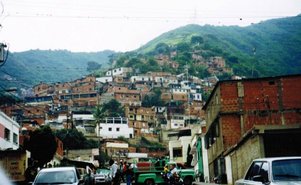
After a long weekend on the island, we felt the calling to go back to Caracas to check on our visas. After more boxing out in line, we were told that it would be one more day. No problem. To pass the time, we hired an old taxi driver to drive us all around the city and show us the attractions — including a glimpse of the bad neighborhoods to see how the common person lived. He was hesitant, and we had to urge him again and again to drive us into these barrios. “This doesn’t look so bad,” we said to ourselves, as I snapped a couple photos of the scenery. When we turned up this one street the driver whipped the car around instantly and sped off in the other direction, tires screeching. When we questioned him why he abruptly drove off he only said, “Ladrones,” which means “thieves.” We thought he was crazy and just being paranoid, but found out otherwise pretty quickly.

Picture
We were waiting at a red light only a few blocks down, when all of a sudden a motorcycle rolled up with two skinny tattooed guys on it. They pulled up right next to my door and started yelling, and reached through the open back window, trying to grab at me. They were trying to rob us of our cameras, wallets, and watches, whatever a tourist might have on him. I was in shock, but in a split second it was obvious they were about to get violent, and there we were trapped in the back of this taxi. All of a sudden the old man slammed the gas and took off, speeding through a red light and dodging traffic. The thieves chased us for about ten blocks, trying to catch up and pull alongside the swerving taxi, but our cagey driver eluded them, and just as quickly they peeled off when we passed a police car. We were safe.

It took a minute for my heart to stop jumping. Our driver explained that they were gang members who controlled the barrio’s drug trade with violence, robbery, and intimidation. He said that they had knives and guns and they weren’t afraid to use them. So when they saw a taxi cab in their neighborhood (which never happens) and a white guy pulling out a nice camera (which also never happens), they decided to jack us.

We must have looked as conspicuous as if a helicopter landed in the middle of your street and Donald Trump got out. The driver turned his face around and showed us a big scar that led from his cheek to the side of his mouth. He told us that he’d been carjacked before in his taxi and the robbers pulled a pistol and shot him at close range. The bullet ripped through the side of his mouth and exited his cheek.

Our luck was changing, and indeed the next morning our shiny new visas were ready for us at the Brazilian embassy. We boarded a plane the following morning with our fingers crossed, hoping we were leaving behind the Dynamite-Head brother ad-libbing Queen songs, Hugo Chavez and his nieces, toothpaste on my man-junk, high-speed chases with ladrones, cab drivers with bullet scars, the Ciao Line, the Dantean hell of the King’s Inn, and butcher knives in back seats forever. But we did remember to pack the Frisbee, just in case we wanted to hit someone else in the head, which was really just our way of saying hello.

Direct hate mail to Norm HERE

Read Norm's books here...

1 Comment

TamaRUMORS.

3/5/2013

3 Comments

 
Picture
TamaRumors

One morning I watched a dog eat a dead iguana in the road. We all did—it was our morning entertainment. The crew at Sarita’s Bakery sat outside and watched the mangy dog circle the carcass, ripping it apart. After it was done it rolled in its kill and laid down to sleep in the sun. When a car drove up, the driver had to swerve around because the dog was too lazy to move.

“Look at that dog. He’s not even moving,” Surfer Scotty said.

“Yeah,” I said.

“It’s going to be a hot one today,” Salty Dog Rodney said.

“Sure is,” I said. It always was hot so I don’t know why we bothered saying it every day, but we did. 

I liked the streets when it was early, sitting outside Sarita’s when she first opened, watching the other shopkeepers hosing down the sidewalks in front of their stores, a deliveryman with bread steaming from the basket of his bicycle. Sleepy Nicaraguan and Dominican workers walked up the road toward the nice houses in white uniforms, their feet still hurting from the day before but smiling and thanking God just the same. 

Sarita’s Café was the center of the Tamarindo gossip exchange. Gossip, or “el chisme” in Spanish, was the central activity in town, the only currency shared by all. It was so prevalent that locals referred to our town as TamaRumor. We had plenty to talk about—there’s nothing more dynamic than a small town in the tropics. In fact, the smaller the town, the more complex the relationships, the more the vines grow intertwined. 

Information in Tama spread strictly by word of mouth. There was no local TV coverage, no local radio, no town hall I could see, no town meetings, and no community bulletin board. There was one monthly rag that covered local events and posted a surf report, called…the TamaRumor. The only daily newspapers were in San Jose, so far away, both in distance and culture, that it was like reading about another country. 

It was easier to get our world news from Sarita’s, and I liked it there. Sarita gave me a local discount so coffee was half price, only 400 Colones. To further entice me into her establishment she kept a bottle of Baileys behind the counter just for me. Where else in the world do proprietors in a café gladly contribute to your 7:00 a.m. alcohol consumption? 

For a lot of us, Sarita’s was our town center, our water cooler since we didn’t have real jobs. There were five seats out front so the regulars joined me in our stakeout of the dirt road. 

“Oh no, here comes Big Teeth,” Rodney said.

“Ahhh shit, I can’t stand this guy,” Sarita said. “He’s so rude.”

“What’s his real name again? Mike? Carl?” I asked.

“Who the fuck knows? Big Teeth,” Sarita said. Big Teeth pulled up on his motorcycle in a cloud of dust, his German Shepherd running closely behind. He dismounted, took off his helmet, and started up the steps to the café. The dog followed, barking. 

“Jesus, he’s got some nasty choppers,” Surfer Scotty said. “Those things could really do some damage if they got a hold of you.”

“Yeah, and the dog does, too,” I said. 

Big Teeth ordered coffee and came outside. The rest of us just sat there and didn’t say much. He hiked his khakis up to his chest, made some racist comments, and offended a passing girl before getting on his bike and driving away with the dog. 

“He’s always complaining about my muffins and my prices,” Sarita said, smoking a cigarette.

“I like your muffins,” Scotty said.

“We like your muffins, too” Rodney said.

“What about my prices?”

“I like your muffins a whole lot more than your prices,” I said. She pretended to pour coffee on my head. 

Sarita was from Rhode Island, a fiery redhead with the sass to match. Her real name was Sarah, but there were so many Sarah’s in town that I think she opened a café just to differentiate.It was nice to have a fellow east coast ball-buster in town. Every morning I looked forward to being lambasted with insults the moment I walked through her door. 

Where I’m from everyone talks shit, whether it’s puff-chested Italian bravado, mellifluous banter from the hood, or biting Jewish sarcasm. If your friends weren’t talking shit to you then you knew there was a problem. Growing up in New Haven was like being at the Olympic Training Center of shit talking, and I was a prodigy fast-tracked for the gold.

That’s why being a writer is my dream job—I get to talk shit for a living in a semi-socially-acceptable forum where I won’t get beat up or thrown in jail. I can make people laugh and hopefully get paid for it one day. What are the alternatives for me? A used car salesman? A politician? My God, those are some horribly scummy vocations. No, I think I’ll stick to writing. 

Sarita had a first-class yapper on her, too; not quite on my level, but then again, who is? East coast shit talking isn’t meant to be hurtful at all—quite the opposite; we understood that the frequency and viciousness of the verbal attacks actually corresponded with how much we cared for each other. So a typical east coast shit talking session at Sarita’s might have sounded like this (with translation for the rest of you schleps):

I’d walk in.

“Ohhhhh nooooo! There goes my morning,” Sarita would say. (Good morning, kind sir. I hope you are well.)

“Excuse me, I must be in the wrong place. I was looking for a café and this is obviously a shit hole.” (I wish you a splendid day too, fair lass.)

“No, please, come in—you’ll fit right in then. Wow, you look like crap!” (So nice to see you. Did you sleep well?)

She’d pour the Baileys and fresh café into my cup and hand it to me, noticing the t-shirt I was wearing. 

“What’s with you and yellow shirts all the time? You wear one like every day. Do you think you look good in yellow or something?” (I like your shirt. You look good in yellow.)

“Wow, that’s a LOT of lipping you’ve got going on. You’re at about an 11 and we can use you at a 4.” (Why thank you, I appreciate that.) 

“Oh, whatever, Norm. Why do you even come here? No one likes you.” (Thank you for coming. We really like you.)

“Hey, if you prefer, I can leave and never come back.” (I like you too and appreciate your great café.)

“Don’t threaten ME with a good time!” (Don’t threaten me with a good time.)

That was Sarita’s favorite saying: “Don’t threaten MEwith a good time.” 

And so it went, on and on every day, a witty repartee amongst eastside friend-emies suitable for framing. 

Sarita had an apartment near me in Pueblo del Mar. I helped her carry supplies to and from the café because she’d injured her foot. The first time I saw her apartment I was absolutely certain she was running a meth lab. White powder snow-flaked the countertops and it was approximately 187 degrees, even though the ceiling fans were working overtime. Everywhere I looked there were bins, tubes, and beakers containing spices, icing, and white powders of mysterious origin. I estimated the street value of her apartment to be $600,000 U.S. dollars, but she claimed it was just where she did all of her baking. Yeah, right.

She lived there with Jason, her gringo boyfriend. He was a personal chef who didn’t have much work so he sat around the apartment smoking weed and watching Patriots games on his laptop all day. If I had to pinpoint his personal philosophy on life, I’d say that Jason was a follower of “I-Don’t-Give-A-Fuckism.” I respected him for that. We’d sit in front of the café in the afternoons, when he was watching the place for Sarita, and talk about old school punk bands, end-of-the-world conspiracy theories, and whether you’d rather get hit in the face with a lead pipe or a baseball bat—important stuff like that. I liked Jason. He looked a little rough around the edges, and suffered from crippling social anxiety that kept him from hanging out in public a lot, so we had more in common than he might have guessed. 

Jason and Sarita were always on-again, off-again. Sarita would need someone to talk to at the café, or knock on my door to say hi. It’s useless giving relationship advice to anyone, but I did root for them so I just said “yup” and “I hear you” and shook my head in agreement every 14 seconds, secretly wishing she’d brought over some of her famous meth cinnamon rolls. I liked them both but I wanted nothing more than to stay out of their relationship woes, though the human stain always seems to follow me.

Running a business in Tamarindo was a daunting task. Sarita had bills to pay and already had to work twenty hours a day trying to hold it all together. I don’t know how she did it, but it didn’t look like fun. She hired my neighbor’s daughter to help, but that just created another salary to pay. Sarita was always exhausted and stressed, but to her credit she kept up her usual chipper, crappy attitude with us. 

When tourists came into the café, us locals tried to put on a good show and watch what we were saying. The café wasn’t like your neighborhood Starbucks back in the States. Every morning, tourists poked their well-shampooed and conditioned heads inside and asked for a vente caramel Macchiato or inquired if she served Frappachinos. No matter what they ordered we all just pointed to the big metal coffee pot sitting on the counter. We had coffee or more coffee—drink it and don’t complain. 

I think I speak for everyone who thinks a “barista” is just a dude who makes coffee when I say that the whole Starbucks thing has gotten a little out of control. It’s to the point that the corporate coffee culture is gentrifying the last place I’d ever expect—the hood. 

Before I left Sacramento, I was sitting in a Starbucks one afternoon on Stockton Blvd. For those of you who aren’t familiar with that particular street, it rivals any avenue ‘cross the country named “Martin Luther King Jr.” or “John F. Kennedy” as ghetto-fabulous. So I was just sitting there, chilling, and this thug walks in with a gangsta limp—gold teeth, hoodie, jeans sagging. I figured he was there to rob the place, which was perfectly fine with me, but instead he walked right past the line of customers up to the register, leaned his tattooed forearms on the counter and said: 

“Yeah, like, ya know what I mean, yo yo—hook me up with some of dat…grande triple shot half-whip vanilla soy decaf mocha. Please.”

I couldn’t believe my ears. I wanted to shake him by his Sean Jean shirt and scream, “Really G?! Come onnnnnn, boo boo, you gonna go out like THAT?! That’s not a coffee you just ordered—that’s a Prince song!” 

Well, I can promise you that you wouldn’t find any of that same opulence, pretension, or insect-free cleanliness at Sarita’s! But alas, she did need to cater to the tourists because us deadbeat locals weren’t enough to make a living off. So we helped her out any way we could, even inviting them to sit down with us. You know me by now, I HEART Tourists. I was more than happy to answer any questions they might have…about sharks. 

The surf posers came right off the plane with legs so white they were unsuitable for public viewing, wearing Bob Marley t-shirts they’d just bought at Target, holding short boards they could never ride. They’d come into Sarita’s for a quick shot of java on their way to the beach. Once they saw Surfer Scotty, Salty Dog Rodney, and me sitting outside, they’d figure it was a good time to ask some locals a few of questions. Which beach was best for surfing? When was high tide? What was a good place to buy a new rash guard? But most of all, they wanted to know about sharks before they jumped into the ocean. 

“So, fellas, are there any sharks in the water down here? I mean, is it safe?”

“Oh yeah, perfectly safe. Nothing ever happens,” I’d say.

“For sure, you’re fine in the water. No worries,” Surfer Scotty said.

“Yup, 100%,” I said.

“110%!” Scotty chimed in.

“Whewww! Okay, cool. I was a little worried because I’ve never been in the Pacific before and before I left it was Shark Week on the Discovery Channel.”

“Well…except for that guy last summer,” I said. “Right, Scotty, remember him?”

“Oh yeah, of course. Except for the guy.”

“Guy? Guy?! What guy? What happened? What happened last summer with the guy?”

“No one knows for sure,” I said. “He was a local, a good surfer, too, out at Playa Grande with a couple of his friends. He got bitten by a shark and died. Does that about cover it, Scotty?”

“Yeah, but some say it was a crocodile. Not sure. But something definitely bit him on the leg and he died.”

“You’re not kidding?” the tourist said, looking over his shoulder to make sure his better half wasn’t listening. “We Googled it but nothing like that came up. Please don’t tell my wife—she wanted to go to Amish country, instead.”

“Ohhh, you have to be careful with those Amish, too,” I said. “They’re sneaky bastards once they get ahold of you.” 

“But, to be fair, he bled to death because they took forever getting him to the hospital,” Scotty said. “He was only 200 meters away from the medical clinic but instead of putting him on a boat across the estuary they called a taxi. It took 45 minutes to show up and then they drove around for a while.”

“Jesus, that’s awful. Please—I don’t want to hear anymore.”

“Oh yeah, so listen to this,” I said. “I heard he bled out in the back of the taxi in a gas station parking lot across the street from the clinic.”

“Big shark, too, from what his friends said. Ripped half his leg off. And once they get a taste for human blood, it’s just a matter of time,” Scotty laughed.

“Ughhhh, oh my God!”

“Hey—watch out, you’re spilling coffee on my flip flop,” I said. “But really, don’t worry about it, buddy. It’s perfectly safe and I’m sure you’ll be fine.”

“Perfectly fine! Never better!” Scotty said. “But just remember if you DO get bitten by a shark, or a crocodile, just don’t call a taxi! Hahahaha.” 

“Hahahaha, good point, Scotty!”

Bob Marley suddenly lost his appetite and left half of his banana bread on his chair for the ants to swarm. He looked a little green when he left, carrying that surfboard like a tombstone, heading in the opposite direction from the beach. Odds were that they’d spend the rest of their vacation in the hotel pool. 

The moment the tourists were out of earshot we started up our shit talking session right where we’d left off. Game on. From our chairs in front of Sarita’s we had a perfect vantage point to watch people in town pass by. It was a great way of ascertaining everyone’s personal business each morning, the perfect forum to judge without amnesty. It was immature, irresponsible, and borderline cruel, but hey, what can I say—you’d do it, too. 

Big Chuck, the jolly personal chef, walked by. I liked Chuck—he was always really cool to talk to as he smoked bud, wading in the pool at our apartment.

“Didn’t he and Angela break up? She’s been a hot mess at the bars every night.” 

“I don’t know. I think they keep making up and breaking up.”

“That’s too bad, I like Big Chuck.”

“It’s too bad for her. I heard she borrowed money from Longboard Sarah and never paid her back.” 

My big-boobed alcoholic neighbor walked by, squinting against the sun. She wore the same dress as the night before and carried her high heels. She crossed the street before she passed us in a feeble attempt to evade notice. 

“Hiiiiii there! How are you? Did you have a rough night?” we called out. She walked faster. 

“You should have seen her at the barbecue the other night. She was sloshed! I think she hooked up with Grant.” 

“Your friend Gringo Grant? I thought she was a lesbian?”

“Your mom’s a lesbian.”

“Yeah, well, your dad is a lesbian.”

“That doesn’t even make sense.” We all took a timeout, and sipped our coffee.

“Didn’t Grant’s apartment get broken into? He lives in Langosta with that tall guy who plays online poker, right?”

“Yeah, while they were away doing their border shuffle someone broke in and cleaned ‘em out: TV, laptop, nice camera—they got it all.”

“Damn, that sucks. Who was it? A Critter?”

“Well, I’m not supposed to say anything, so you didn’t hear it from me, but Grant thinks it was Tony Touch.”

“Who’s that? The crack head guy dating the waitress from Le Beach Club?”

“Yeah he works at Blue Turtle tours. I’m pretty sure he’s clean these days, or at least off that shit.” 

“I heard he owned a gun.”

I didn’t say anything.

“I heard he beat her up.”

I didn’t say anything.

Lena drove by in her black Mercedes. I ducked down, but she didn’t see me anyways because she was on her cellphone. I’d been dodging her for months and had no desire to deal with her ever again. 

“Look at that one. Someone told me that she married a rich old gringo years back and took him for all of he was worth. That’s how she got her money.”

“Yeah, sounds about right. Chris said she ripped him off in a real estate deal and stole five acres of his land.”

“I guess they’re going bankrupt on those condos he was building.”

“Oh, speaking of bankrupt…guess what I heard yesterday...”

It went on and on, all morning, talking about who was on a bender and who ripped someone off and, who was acting like a prick, and where everyone was trying to put their pricks. 

“Man, I saw Nayla, the yoga teacher/Spanish teacher/personal chef yelling at someone outside the market yesterday. She was really losing her shit.”

“Yeah, I think she was yelling at Mack White. I heard he was sloppy drunk the other night and grabbed her ass, and she slapped him.”

“He was at Casa Crack last week—I saw him walking out of that Dominican girl’s apartment.”

“Really? And what were you doing at Casa Crack?”

“Never mind.”

Someone was going crazy. Someone else was pregnant. This one had a venereal disease, that one was broke and selling their surfboard to buy a ticket back to the States. Nothing was out of bounds and we didn’t have to worry about being politically correct. That was Sarita’s Café, the best source of information Tamarindo, excuse me—TamaRUMOR—had to offer.

“There are rumors about you, too, you know,” Sarita said to me one day.

“What? Are you serious? Like what?” I said.

“I heard that you used to be in the army, but now you’re ultra-religious and don’t even curse.”

“What the fuck? Who the hell said that?”

“You know, people talk. That’s just the word around town,” Sarita said.

“Jesus Christ, that’s crazy talk! How do these rumors even get started? People should be more responsible with what they say.”

Sarita, Rodney, and Scotty shook their heads in agreement and we looked out at the road. The stray dog rose from the dirt, yawned, and started dragging what was left of the iguana down the road. 

“Sure is hot today,” Rodney said. Tamarindo, Costa Rica, surf, ski, snowboard, diving, pura vida, Central America, Nicaragua, San Juan del Sur, Amazon best seller, travel, adventure, backpack, hiking, sharks, Endless Summer, Robert August, memoir, fitness journey, globetrotting, perfect beach, paradise, spring break, expat, live abroad, work abroad, summer reading, around the world, great read, humor, laugh out loud, South of Normal, Pushups in the Prayer Room

Check out more of South of Normal and order your copy.

3 Comments

An excerpt from the chapter "The Gift That Keeps On Giving," in South of Normal.

3/3/2013

0 Comments

 
Picture
...The bags were repacked without an inch of extra space. I had to sit on them to get the zippers closed. Then Tania emailed and asked if I could bring down something small for her. What was it, I asked? A purse? Shoes? Some special brand of cosmetics? No, it was a vibrator, she said. 

She was serious. For some bizarre reason, all forms of pornography are illegal in Costa Rica, so even sex toys are hard….err…difficult to get (though prostitution is perfectly legal—figure that one out!) She needed me to order it and then she’d pay me back once I got down there. 

First off, I wasn’t sure if people called them vibrators or if the correct term was dildos. I’m not sure I even wanted to know, but sheepishly I logged on to Drugstore.com and placed an order for the “Pipedreams Multi-Speed Deluxe Rabbit Pearl” while looking over my shoulder. In Pink. It cost $29.99 and would be delivered in three to five business days. Super. 

I was staying at my mom’s house in Connecticut for a month before heading down south, so I watched the mail intently and avoided eye contact with the postman. Then one day the package came. I whisked it into the basement before it could be discovered, like a grade school kid hiding a bad report card. 

I reported back to Tania that “the eagle had landed.” She emailed back that her best girl friend found out I was bringing a dildo and desperately wanted one, too. Could I find it in my heart to bring another one down? If it was a hardcover book, I’d have to put my foot down, but there was something dashing and risqué about being an international dildo smuggler, like a sexual secret agent. Bondage, James Bondage. I emailed Tania back and told her that would be fine because, like I always say, what’s one more dildo among friends who you’ve never even met before? 

I was becoming a connoisseur in ordering sex toys, so I logged on and ordered another Pearl Rabbit, but this time in a lovely lavender shade. My order of two dildos within a week must have triggered some Drugstore.com auto-preference because all of a sudden I was getting emails advertising all sorts of new freaky stuff, to go along with my own normal freaky stuff. Delete. Delete. Wait, what was that one? Oh, sorry…delete. 

The purple dildo got delivered, taken out of the box, and rolled up in a pair of basketball shorts. I stuffed it into my luggage next to its partner in crime and the fuel pump for a Chevy that I was bringing down for another friend. I sat on my bag in order to get the zipper closed again. Okay, Tania, I emailed, I got the second one and was all set to come down in a week. She emailed back that she really wanted personal lubricant. Jesus Christ—now it’s lube? And does it even come in any other kind besides “personal?” How impersonal can you possibly be if you’re breaking the lube out? Well, I guess having a dildo without lube is like going to the movies and not ordering popcorn. I didn’t bother Googling the Costa Rican statutes on the legality of lube, but logged right back onto Drugstore.com. The size of the lube she wanted was ridiculous—I buy Ketchup at Costco in smaller sizes—so instead I ordered three small bottles of “Aqua Brand Warming-to-the-Touch Personal Lubricant” for $14.99, ending the whole sordid affair once and for all. 

They got delivered by a suspicious postman who winked at me, and then the package was whisked into the basement, wrapped in individual plastic bags and duct taped shut, sealed in my toilet bag in case they opened, and stuffed in my luggage. I didn’t confirm with Tania for fear that she might order fuzzy handcuffs or a blow-up doll. 

I was itching to get out of the States, the anticipation killing me...

My sister drove me into New York at four in the morning. I sat down in my window seat, put on my headphones, and started to doze as the plane lifted off for a four-and-a-half-hour flight to Liberia Airport in Costa Rica. 

Somewhere over Mexico I was jarred from my pleasant snooze by a horrific thought. I’d made it through security in New York but on international flights you had to go through customs once you landed. The last time I visited Costa Rica the customs agents went through my luggage with a fine-toothed comb, making me take every single thing out and placing it on a metal table for examination - my risqué contraband would be found! 

Since pornography was illegal in Costa Rica, I was technically breaking the law by bringing those dildos into the country. The customs agents would go through my luggage and I’d be exposed as a sexual deviant who incorporates Chevy fuel pumps and dildos the color of Paas Easter eggs into his love-making repertoire. That’s some Japanese-level kink. Oh the shame, the embarrassment. I envisioned lube-sniffing K9s barking ferociously and the customs officers ripping through my bags and waving pink and purple dildos overhead while yelling for security. Everyone in the airport would see me taken away in handcuffs and my puzzled, excruciated face would be all over the evening news. I was mortified by the thought, sweating in my seat even in the cold artificial air at 30,000 feet. 

I looked around for an escape. Maybe I could find a nice drug trafficker on the plane and switch contraband with him before we hit customs? I’d rather take the fall for ten kilos of coke and do twenty years in jail than have a whole airport full of people see I’m one of those double-dildo-edible-lube-fuel-pump freaks. But much to my chagrin, no one around my seat looked remotely like a drug trafficker, though that nun in first class looked a little suspect. 

All of the tourists on the plane were excited to land, ruffling their hideous flowered shirts and passing their guide books back and forth, but I beeped the flight attendant and asked if we could take a few more laps over Costa Rica to enjoy the view, delaying the landing for an hour or so. “Sir, please put your seat back up and your tray table in the upright locked position,” she replied... 


Will I find a nice drug trafficker to switch with?  Will I make it through customs safely?  Do I ever get to use the lube?  Buy the book South of Normal and find out!  

0 Comments
Forward>>

    RSS Feed


      Receive a digital postcard from Norm every month:

    Yes, I want a postcard!

    Don't miss Norm's new book,
    The Queens of Dragon Town!

    See More

    Norm Schriever

    Norm Schriever is a best-selling author, expat, cultural mad scientist, and enemy of the comfort zone. He travels the globe, telling the stories of the people he finds, and hopes to make the world a little bit better place with his words.   

    Norm is a professional blogger, digital marketer for smart brands around the world,  and writes for the Huffington Post, Hotels.com, and others.

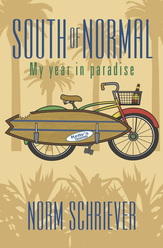
    Check out South of Normal his Amazon.com best-selling book about life as an expat in Tamarindo, Costa Rica.

    Cambodia's School of Hope explores education and empowerment in impoverished Cambodia, with 100% of sales going to that school.

    The Book Marketing Bible provides 99 essential strategies for authors and marketers.

    Pushups in the Prayer Room, is a wild, irreverent memoir about a year backpacking around the world.  

    Follow Norm on Twitter @NormSchriever or email any time to say hi!

    Categories

    All
    Advice For Writers
    Amazon
    American Exceptionalism
    Anthropology
    Asia
    Backpack
    Basketball
    Best Seller Lists
    Blogging
    Book-marketing
    Book Review
    Book Reviews
    Cambodia
    Charity
    Child-poverty
    Cloud 9
    Communications
    Costa Rica
    Crazy-asia
    Culture
    Dumaguete
    Education
    Environment
    Ethics In Writing
    Expatriate
    Favorite Song
    Festivals
    Fraternity
    Funny
    Future
    Geography
    Give A Photo
    Giveaway
    Giving Back
    Health
    Heroes
    History
    Hugo Chavez
    Human Rights
    Humor
    India
    Islands
    Itunes
    Laugh
    Maps
    Marijuana
    Martial Arts
    Memoir
    Music
    Nature
    Nicaragua
    Non Violence
    Non-violence
    Ocean
    One Love
    One-love
    Our World
    Philanthropy
    Philippines
    Population
    Positive
    Positivity
    Postcard
    Poverty
    Pura Vida
    Pushups In The Prayer Room
    Race
    Reviews
    Safety
    San Juan Del Sur
    Science
    Screenplay
    Self Publish
    Siargao
    Social Media
    Southeast-asia
    South Of Normal
    Speech
    Sri Lanka
    Story
    Surf
    Surfing
    Tamarindo
    Thailand
    The Philippines
    The-queens-of-dragon-town
    Tourism
    Travel
    United Nations
    Venezuela
    Work From The Beach
    World Health
    Writers Forum
    Writing
    Writing Forum
    Writing Your First Book

    Archives

    October 2022
    September 2022
    August 2021
    December 2020
    November 2020
    October 2020
    September 2020
    August 2020
    July 2020
    June 2020
    April 2020
    January 2020
    December 2019
    November 2019
    October 2019
    September 2019
    August 2019
    July 2019
    June 2019
    May 2019
    April 2019
    March 2019
    February 2019
    January 2019
    December 2018
    November 2018
    October 2018
    September 2018
    August 2018
    July 2018
    June 2018
    May 2018
    April 2018
    March 2018
    February 2018
    January 2018
    December 2017
    November 2017
    October 2017
    September 2017
    August 2017
    July 2017
    June 2017
    May 2017
    April 2017
    March 2017
    February 2017
    January 2017
    December 2016
    November 2016
    October 2016
    September 2016
    August 2016
    July 2016
    June 2016
    May 2016
    April 2016
    March 2016
    February 2016
    January 2016
    December 2015
    November 2015
    October 2015
    September 2015
    August 2015
    July 2015
    June 2015
    May 2015
    March 2015
    February 2015
    January 2015
    November 2014
    September 2014
    August 2014
    July 2014
    June 2014
    May 2014
    April 2014
    March 2014
    February 2014
    January 2014
    December 2013
    November 2013
    October 2013
    September 2013
    August 2013
    July 2013
    June 2013
    May 2013
    April 2013
    March 2013
    February 2013
    January 2013

Norm Schriever

Email:     [email protected]