Norm Writes
  • Home
  • Who in the World
  • Blog
  • Postcards
  • Why I write

Taj Mahal: the greatest love story ever built.

2/2/2015

3 Comments

 
Picture
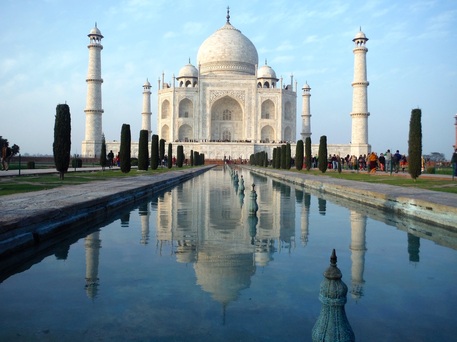
There are many great architectural marvels in this world: the Sistine Chapel, the Burj Dubai, the Pyramids of Egypt, and the Great Wall of China, but none that stand as a living monument to two peoples’ love more than the Taj Mahal. The iconic marble temple complex in Agra, India doesn’t just have a love story intertwined in its creation myth, the Taj Mahal is a love story.

 The story starts in the year 1592 with the birth of Prince Khurram, the son of Jehangir, the fourth Mughal emperor of India and the grandson of Akbar the Great. Price Khurram was born to a life of royalty and unsurpassed privlidege, his name changed to Shah Jahan in accordance to custom because he was the rightful heir to the throne after his father. 

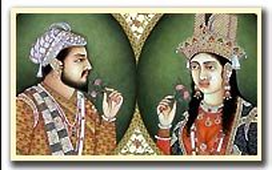
When he was 14 years old, Shah Jahan was walking with his entourage in the Meena Bizarre and witnessed a girl selling silk and glass beads. She was the most beautiful thing his eyes had ever seen and it was love at first sight. The girl was named Arjumand Banu, a Muslim Persian princess that was a year older than him. Upon meeting her, Shah Jahan immediately ran back to his father, the emperor, and declared his undying love and that he wanted to marry her. The love was mutual and the wedding was set and the young couple wed in 1612. 
Picture
They lived in blissful happiness and love and in 1628, Shah Jahan was crowned the new Emperor and accordance to the custom, Arjumand Banu was give the title of Mumtaz Mahal, or “Jewel of the Palace.” Although Shah Jahan had several wives (this isn’t the most feminist love story), Mumtaz Mahal was his favorite and the one he truly loved with all his heart. They had many children over the years, until in 1631, Mumtaz Mahal died giving birth to their 14th at age 40. While she was on her deathbed, Shah Jahan professed his undying love and devotion to her, and promised to never remarry once she was gone. He told her before her last breath that he would build the most beautiful monument the world has ever seen over her grave.
Picture
After her death, Shah Jahan was so heartbroken that he ordered the whole Emperor’s court to mourn with him for two full years. He honored his pledge to her never to marry again (a big deal for an emperor at that time!) and then set out to plan and build the greatest testament to love the world has ever seen, a mausoleum over her grave so shining and ornate and grand that the world would remember her beauty, forever.

It took 22,000 workers and artisans 22 years to build the Taj Mahal, which means “Crown Palace”. (There are claims that after completion, Shah Jahan had the hands cut off of all his craftsmen so they could never build something that beautiful again, though these claims aren’t proven.) The head architect Shah Jahan chose for the job, Ustad Ahmad Lahauri, was not actually from India, but a Persian from Iran, so the late queen’s origins would be honored. They used 1,000 elephants to transport the heavy building materials like slabs of marble and stone. When it was done, the total price tag was 32 million Indian rupees, or the equivalent of $1 billion at the time, which would be much more in today’s dollars. 

Picture
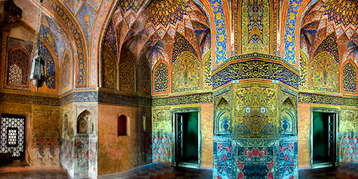
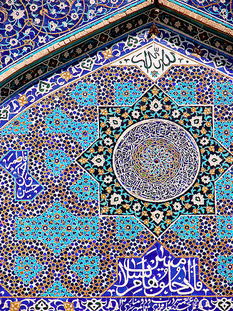
They used the finest white marble brought all the way in from the bordering country of Rajasthan. Depending on the time of day and how the sunlight kissed it, the marble of the Taj Mahal changes colors; sometimes rosy pink, milk white, or golden yellow, all representing the many feelings he had for his wife. 28 kinds of the most dazzling precious and semiprecious jewels were used, tens of thousands of stones in all. The brought in turquoise from Tibet, jade from China, crystal, lapis lazuli, amethyst and turquoise from all over the world. These jewels were crafted together into the most intricate flowers and then replicated thousands of times in patterns all over the walls and ceiling of the Taj Mahal. Writings from the Quran were inscribed in golden calligraphy on the arched entrances and walls.

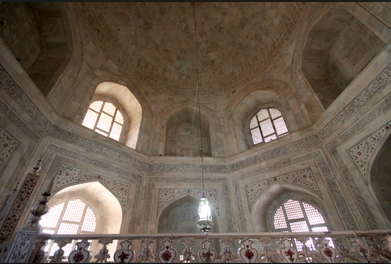
Built on the southern bank of the Yamuna River in Agra, the Taj Mahal consisted of a spiraling domed mausoleum. Centered inside was an octagonal marble and jewel-encrusted chamber, which was supposed to be the resting place of Mumtaz Mahal. But her body was actually housed in a sarcophagus far below that very spot, in accordance with Muslim doctrines.
Picture
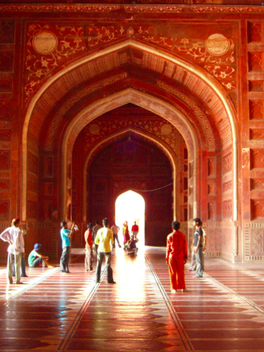
In total, the Taj Mahal is 240 feet high and surrounded by four smaller domes and four minarets, or Islamic prayer towers. In front, there is a long series of gardens and crystal clear rectangular pools. The entire Taj Mahal complex is guarded by a red sandstone gateway entrance building and a red sandstone mosque, and jawab (“mirror”) or replica building directly across from the mosque.

Once completed, the Taj Mahal was just the first part of Shah Jahan’s tribute to the inextinguishable love for his bride. He planned to build a second grand mausoleum – this one in all black – directly across the river from the Taj Mahal, joined with a connecting bridge like two lovers holding hands, and there he would be buried when he died. 
Picture

But Shah Jahan’s son, Aurangzeb, seeing the opportunity to dispose his ailing and heart-stricken father (and perhaps worried that he might spend the whole family fortune on more construction) usurped his father, the Emperor, and took power in 1658. He placed Shah Jahan under house arrest in a tower of the nearby Red Fort of the rest of his days, his only solace that he could see the Taj Mahal out of his one little window. Shah Jahan sat in prison for 8 years until he died in 1666, still in love with the princess he came across in the market so many decades before. His body was placed in a tomb right next to hers in the center of the Taj Mahal, the only thing that is a-symmetrical in the whole structure.

Over the centuries, the Taj Mahal changed hands with each new Emperor, ruler and invader. The British changed the gardens from the roses and daffodils that were originally planted to the Wimbledon-like cool green lawns you see today. During World War II and later during conflicts with the new nation at war, Pakistan, false scaffolding and structures were built around the Taj Mahal to confuse and deter enemy bomber pilots. 
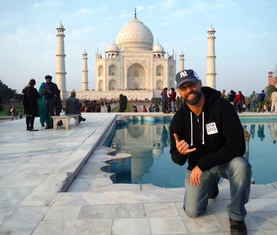

Picture
These days, the Taj Mahal has been named one of the original Seven Wonders of the World.  Each year, ore than 3 million tourists from all around the world come to the Taj Mahal to witness its grandeur and learn about the Emperor who constructed it as a tribute to his one true love. Even 400 years later, it is the greatest love story ever built.

"Not a piece of architecture, as other buildings are, but the proud passion of an emperor's love wrought in living stones."
-English poet, Sir Edwin Arnold

-Norm  :-)


Check out the new book, Travel With Norm


3 Comments

15 things I learned by eating vegetarian for a month.

2/1/2015

0 Comments

 
Picture
I recently tried out a strict vegetarian diet for a month as I was traveling through India, the country with the highest rate of non-meat diets in the world. Here are some personal observations, not facts, and I welcome all feedback and comments that will help educate me further on the subject. (I have no doubt I'll be humbled many times over by what I don't know.) So here are 15 things I learned during my month with a vegetarian diet:

1. Your body releases strange and horrible things as you detox from decades of eating meat and purge with only fruits, vegetables, nuts, dairy, and grains.

2. While it may seem like a gastronomical torture to avoid meat (it did for me in the past) gaining success as a vegetarian is all about surrounding yourself with good food choices so you don’t even feel you’re missing out. I cheated by going “veggie” while in India for a month, where they have so many curries, stews, and vegetarian rice dishes that I wouldn’t have even noticed meat in there. (And cows are sacred and not eaten.)

3. Substitute the words “animal flesh” for “meat” every time you think about dinner and you’ll see it differently.

4. While it’s undeniable that there are huge benefits to eating vegetarian, that diet doesn’t necessarily equal healthy. For instance, breads, pizza, ice cream, junk food, and soda are all technically vegetarian. So I think you should clarify if you just want to eat healthier or actually be vegetarian for another reason.

5. One of the knocks against a vegetarian diet is that it doesn’t provide enough protein, which animal meat has in abundance. I’m a 210-lbs. (at the time) athletic carnivore, and believe me, that’s not a problem at all. Nuts, avocados, yogurt, eggs, peanut butter, and many other natural foods offer more than enough protein.

The other good news is that these days, there are plenty of healthy and natural vegan protein supplements or powders, like these here.

6. The biggest difference I felt was my energy level. It was more consistent and I didn’t have wide swings of feeling drained and tired and then bursts of energy. I felt consistently alert and active and more calm and relaxed when I was fatigued, not just tired or sleepy. It was like I didn’t burn out and had plenty of energy in reserve always.

7. My skin was clear, my eyes whiter, a nagging toothache from an old tooth filling went away, My anxiety was down, my moods better, I slept better, and I felt lighter, not just in weight but in spirit. However, I don’t know what part of this was because I was near the beach and swimming in the ocean part of the time (but only about a third of my time in India) and what was due to my new diet.

8. Since food was so good and so cheap in India, I ate at least three huge meals every day, with plenty of fruit shakes and iced coffees and snacks in between, and still lost a lot of weight. While I’ve lost weight before as I travel, I did notice it was different this time because it felt more like bod fat I was losing.

9. I didn’t have any cravings to eat meat, but if I did they were mental – not physical. I’d walk by a restaurant that was offering hamburgers or see an ad for fried chicken and think, “I should want that.” But in reality, I just wanted to taste and eat good food – not necessarily that.

10. The first couple days you may feel a little hungry, but after that you feel way more full with less as your stomach and digestive system heals and becomes more efficient. Missing a meal because of travel or whatever wasn’t a big deal at all, where I would have had the shakes and felt panicked before when I ate so much meat.

11. Thank God for eggs.

12. After only a few days, my taste buds changed and I was more in tune with subtle flavors, textures, and tastes. While a veggie sandwich or a dish of veggies over rice would seem extremely bland to me before, I now really enjoyed and appreciated it.

13. I haven’t done much research on the subject, but it’s apparent there are two reasons for going vegetarian: health, and/or cruelty to animals because they are living beings.

I have a good new Australian friend (hi Rana!) who passionately advocates for vegetarianism because it’s cruel for us to kill and eat animals (among other reasons). I respect and appreciate her stance, and that the unspeakable conditions and treatment of animals in slaughterhouses, poultry farms, and generally feeding the modern machine of Western meat consumption are so cruel it’s disgusting.

However, I don’t necessarily believe that means we shouldn’t eat meat. I just think we should try to change conditions so animals are raised, treated, and slaughtered in a more humane and natural way. How can killing something not be cruel?

I realized that if I was placed in the wild with no defenses, I would become some other animal’s food, probably a bear or a mountain line. Or a shark in the ocean. Is that cruel? I don’t see it as so. I look to the Native Americans and their practices of revering and honoring what animals they killed, and made it a point to not waste anything from the kill. When it comes to being in tune with the cycles and circles of nature, I’ll trust the Native Americans.

And purely to play the devil’s advocate, if someone is at a pro-vegetarian protest and a mosquito lands on his or her arm and they swat it, is that cruelty? Do we know definitively that trees and plants and all organisms don’t feel something? If they were out in the wild and it was the option of starve or kill and eat animal flesh, what would they do? Again – I understand and agree with the argument, but I don’t think it’s a completely shut door.

In my newly evolved opinion, becoming a proponent of vegetarianism only because you think killing other animals for food is cruel is slightly misguided. I think everyone should rally for better, more humane conditions and treatment of animals and less waste, but they are not 100% mutually exclusive.

14. Meat looks barbaric and dirty and just gross if you haven’t eaten it in a while. It’s as much portion and digestion as anything. I look at a 6 or 8 oz. piece of steak now and can’t believe that looked tiny to me in the past. That solid piece of flesh has to sit in my stomach until it’s broken down and digested naturally. So when I gorged myself on a 20 oz. steak or a huge cheeseburger or whatever, I realize how long that food was just stuck in my gut, half digested.

15. My month of being a vegetarian is up and I’ve moved on from India to beautiful, wild Sri Lanka. I wanted to try transition easily back to trying a little bit of meat, so I ordered rice, salad, and barbecue chicken last night. The chicken seemed sort of…odd to me. There was so little meat and so much bones, carcass, and membrane to pick around. I did eat a few pieces and it didn’t taste too bad, just like the sauce and the rice that was with it. I fed the rest to the dog who was begging by putting his head on my leg.

Going forward, will I be a devout vegetarian? No, I doubt it. (And I don’t think I’d ever give up some fish or seafood!) But I certainly do think this month of eating only plants has given me a new appreciation and even consciousness of what’s on my plate. I definitely have enjoyed the health benefits, and will adapt my new diet so that I maximize those, while sill enjoying a good quality cut of meat every once and a while.

When I do decide to eat higher on the food chain, it will be a choice – not a default – and will come with the reverence that I am accountable for extinguishing some living thing’s spirit because of what I’ consuming. I will endeavor to stop indulging, wasting, and eating mindlessly. My feet will tread lighter and my grasp on all living things will be a little more gentle. I’ll try to educate myself about how to eat healthier and more humanely, reducing my negative impact on this earth and honoring what I use.

-Norm   :-)


0 Comments

Flying toilets, curry buses, and the golden light within; Notes from weeks #2 and 3 in India.

1/17/2015

118 Comments

 
Picture
Someone opened the front zipper of my backpack again today (happened in Nicaragua this fall, too), probably in the crowded train station. I only had bug spray and a stick of deodorant in that pocket and it’s very apparent they don’t use either of those things in India, so nothing was stolen.

Male friends and relatives are extremely affectionate here. They walk around with their arm around each other or even holding hands. Yet you never really see physical contact or affection between men and women in public, even when they’re a couple.

Every single one of the waiters I’ve encountered is a man.

In fact, almost all of the professional or service jobs seem to be taken by men. With so many people, such high unemployment, and backwards cultural barriers to women in the workplace (or women’s rights at all) I’ve seen women selling fruit and working as cleaning ladies, but that’s it.

People in India go to Dubai for work. They pay a lot, their economy is booming, and it’s much easier to get a visa than the United States. The nice lady who was running my homestay (contradicting my previous statement completely) went over there for three months at a time once or twice a year to work. She had no friends or family there or any life outside of work, but it allowed her to make good wages to send back to her family in India so they could get a little ahead.

One consistent thing in the world – everyone is pissed at the U.S. because out visa process is so ridiculously hard, costly, and stringent, especially after 9/11.  It’s nearly impossible for good, hard working people from poor countries to go there, even for student or work visas. While you may think this is just how it goes to protect our national interests, it’s ridiculously easy for U.S. citizens to get a visa to any other countries, and a flood of American companies set up on foreign soil to make money from those same poor people, or evade paying taxes back home.

Picture
Back in the 1970’s, there was a “brain drain” in India, as many of the doctors, engineers, and smart, affluent people emigrated to the United States because of economic opportunity. Fascinating enough, in the early 2000s when the tech bubble burst and again in 2008 with the recession, many of their children headed back to India to work and live because this country presented better opportunities.

They say the NYPD is looking to hire more police officers of Indian descent so the young guy working at my home stay told me his dream is to go to America and New York to become a cop. However, he's only seen snow on TV and in the movies and thinks the cold and ice looks “nice”. 

The dogs here are very happy and tranquil and there are a lot of them. They just curl up and sleep in the sun anywhere – on the beach, on the train track, or in the street. I was meditating (don’t laugh) and deep breathing and stretching on the beach this morning and a dog came right up and laid down next to me to chill.

Speaking of yoga, I took two classes. One was run by a teacher at an Ayurdic medicine center. I was supposedly for beginners but the pretzeling he was asking me to do was inhuman, and they he was confused why my body wouldn't comply. The second class was on the beach in the morning and consisted mostly of breathing and gentle movements, which I liked a lot better 

Picture
I seriously cannot find a decent Wi-Fi connection here. Everyone says they have great internet when you’re checking into their hotel or contemplating eating at their restaurant, but when they give you the password, it either won’t connect or it connects but the signal is so slow that it takes like 5 minutes just to load a page. It also just goes on and off frequently. I’m really not sure why they can’t figure out Wi-Fi in India considering all of their tech savvy, business acumen, and improved infrastructure. Always a problem and I’ve learned to work fast and keep working whenever I do get a signal. I hate to harp on that, but I need it for work every day so it can be a torturous undertaking.

Some of the Indian hotels in the big cities are very expensive but really subpar, mostly inhabited by Indian businessmen. There’s no rhyme or reason to it, but when you go out to the nicer tourist areas, like by the beach, there are a lot nicer hotel options for a lot less money.

The countryside is beautiful. Once you get out of the cities and surrounding towns, the little backwater and forest villages are well worth checking out.

I saw something really shocking today. I was on the back of a motorbike on the way to the train station and we zipped through a countryside hamlet. As we passed, a skinny yellow dog – no bigger than a small mutt with ribs sticking out - took a running start and jumped right up on top of a 6-foot wall around a house, and then scrambled over. I’ve never seen a dog do that – it was so graceful it looked exactly like a cat might do, and his paws only touched the wall one time as made contact with the wall and vaulted over.

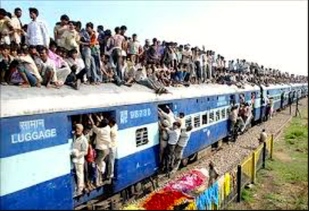
I know I’ve said it before, but the trains are madness. And the madness I’m witnessing is on the nicest upscale sleeper cars, not the 2nd class common passenger cars.

Picture
Joined in a beach cleanup the other day. I saw a poster for it and decided to help, because I love to volunteer wherever I go and trash containment is such a problem in a lot of developing countries (is India still considered developing?)

Shattering my stereotypes, there were a bunch of young Russian hippy backpackers running the clean up. I was assigned to a group with a really cool and really tall dude from Holland and a few others. I added the leader of the Russian volunteers on Facebook to keep in touch, and he proudly told me in broken English that he was called Jesus on social media, spelled Jeesoos.

We picked up all sorts of garbage on the beach for about an hour until our bags were full and our heads cooked from the sun. In all, the 12 volunteers gathered about 20 bags.

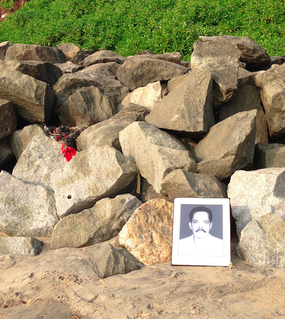
My group was assigned to the temple beach, which was the south end butting up against some rocky crags where a Hindu temple sat. So all sorts of Indian people came to the beach and worship and perform rituals. One of them was to honor their deceased relatives, so they’d make shrines on the beach of lit incense, coins, flower wreaths, and framed photos of their loved ones right by the rocks. So as we walked around picking up trash, we had to be careful not to collect things from these shrines or disturb them. It’s sort of eerie to see these sun and ocean faded portraits strewn about all over the beach.

At temple beach there are three huge burial mounds made from the sand (though no one is in them) with Indian religious men sitting on top of them, orange, white, and black ash on their foreheads, amidst smoking incense. People come and these old religious men bless them…for a fee.

Picture
In Varkala there are a lot of stores selling Tibetan crafts and you can tell a lot of the workers in town are Tibetan or Nepalese.

I’ve been eating vegetarian for two weeks now, save for prawns, fish, or squid a couple of times. With this abundance of amazing vegetable curries, I don’t miss meat one bit. In fact, I saw a dead plucked chicken today in a store and it really looked nasty.

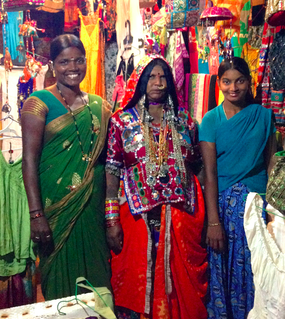
The women dress absolutely beautifully in their sarongs, dresses, and traditional garb with bold colors and golden embroidery.

It’s so strange but there’s a ½ hour time difference to India: it’s 10 ½ hours ahead of New York. I’ve never heard of a ½ hour increment in time zones, but I guess Nepal has a 15-minute incremental difference!

Also, all of India is on the same time zone, though it’s huge.

So far, so good on the stomach front. I have suffered from “Delhi belly” at all, though I’ve been really careful what I eat and drink.

Good thing, because I’ve noticed hotels don’t provide toilet paper (I carry my own rolls anyway) though they sometimes provide soap. But don't count on it.

Picture
And there are very few public toilets in India, or toilets at all for that matter. I read something crazy like only 60% of Indians have access to indoor plumbing and there are far more cell phones than toilets in the country. Good times.

Speaking of toilets, there’s a real thing called “Flying Toilets” here. There are so few public toilets or even indoor bathroom facilities in poor homes, that a lot of common people just defecate into a plastic bag and then just throw it down a hill, into a vacant lot, or into an alley. So you actually have to be careful in some areas not to get hit with one of these flying toilets. The other day I saw a French lady who lives here chastising some teenage boys for throwing their flying toilets off a cliff by the sea.

They drive on the left side of the road here. Or, more accurately, they drive all over the friggin road including going the wrong way when a huge bus or truck is barreling our way, but they are supposed to drive on the left.

The bigger directional problem comes from people walking. For instance, we in the U.S. automatically also walk on the right and when someone is approaching, we move in that direction to let them pass. But Indians and some Europeans walk left with the same intention, and Russians just stand in the middle of it all blocking everyone’s way and not giving a rat’s ass.

Picture
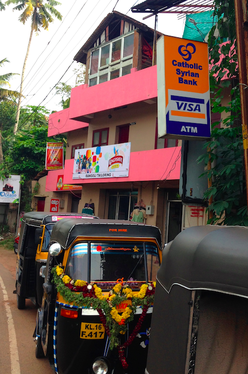
There is only one ATM in the beach community of Varkala, the Catholic Syrian Bank.

They call checking accounts “current” on most ATM’s all over the world.

There are two great institutions in India: the railways, which employ 1.4 million workers (more than the population of a few small countries) and the postal system.

My typical breakfast, at The Juice Shack overlooking the beach, consists of fruit, shredded coconut, yogurt, and honey, and also an omelet. I also get a big water and good coffee. That all costs me about $4.75 on average.

A good number of people here walk barefoot all day every day, even on the city streets, too poor to even afford shoes. A begging man at the train station was limping around with bloody bandages around his feet, which were afflicted with some terrible swelling it looked like. I can’t imagine the pain and worse, the hopelessness he experiences.

There are loads of beggars in the main cities like Mumbai, but in the tourist areas I’ve been too there are very few people begging. Those who are usually are infirm and helpless old people, sitting folding onto themselves in a pile of rags and filth, under the hot sun all day hoping someone takes mercy on them. I can’t describe the look of gratitude, love, and warmth they radiate when I’ve given them just a dollar or two. 

Picture
The train cars have a food service called Meals on Wheels and they wear black polo shirts with the logo. That makes me laugh for some reason.

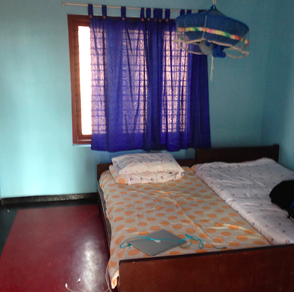
It’s interesting what I notice and how I feel after I went back to the U.S. for 6 months in between the traveling/living abroad life. This time, I want to document the daily minutiae of my life on the road more. So I’m going to try and take a photo of every single hotel room and place I stay in for the next 6 months.

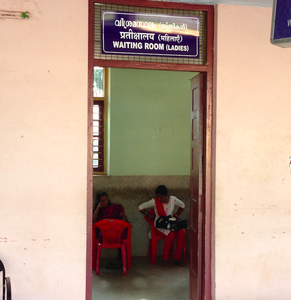
At the train station, there was a room that was a waiting area only for ladies. I’m sure a place for women to have privacy, safety, and be able to care for their children or get a respite from public is greatly welcomed.

I like drinking milk tea in the afternoons. They serve it very hot in a little glass, and the glass is so hot, I don’t know how they pick it up. Or maybe I just need to toughen the F up a little.

Cheese Naan and butter Naan breads are so good its redunkulous. The vast majority of my meals consist of veggie curries and rice and Naan. 

Picture
Verkala was really beautiful and had a terrific vibe. I definitely want to go back one day and spend some more time. But it was a place to visit, not to live I think.  

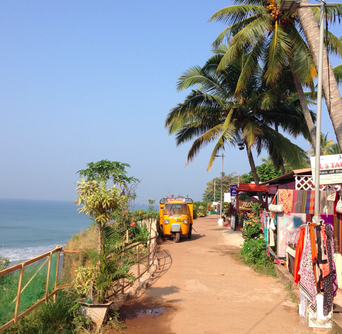
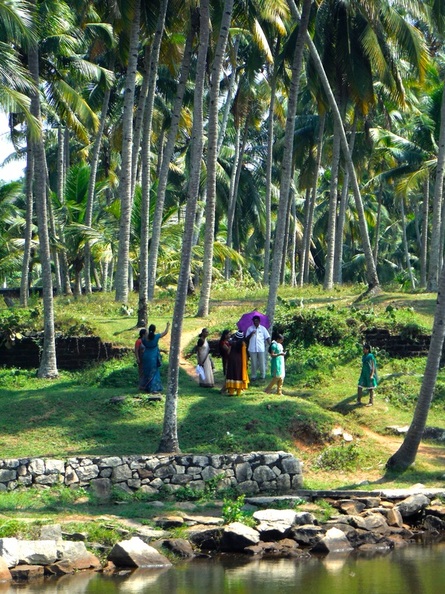
I grabbed my camera and a water bottle and took a walk last Sunday afternoon, getting lost on purpose. I walked for about three hours and found myself on a path that wound up and down the sea cliffs and beaches following the coastline heading north. I passed palm groves, shady meadows with cows, small rivers leading to the sea, grassy parks, and secluded black sand beaches. It was one of the most beautiful settings I’ve ever witnessed, and I was truly in the moment. Everything was green and blue. The sunlight reached inside me. I felt perfectly grateful just to be there and breathing. If I have only those moments, it will make the whole trip worth it.

By now, many of you know the term “Chicken Bus” to describe the common form of bus transportation in developing countries. But it occurred to me: since many parts of India are widely vegetarian, should we change the name from “chicken” bus to a more plant-based moniker? Soy Bus? Nah. I rode the Tofu Bus? Too Whole-Foodsy. How about the Curry Bus? Yeah, I like that one.

Like you see in many developing countries, vendors will all sell the exact same thing even though they’re all lined up together. I always tell my friends abroad - whether they’re beggars, street merchants, shopkeepers, or bar owners – to do something to differentiate themselves. I made friends with a Nepalese family in Varlkala who ran a shop and I told them they should serve free hot tea samples or have cultural dance shows or something to bring the tourists in, but of course they just look at me and smile and say: “So Sir Norm, you want to buy something?”

By the way, children work right along with the adults 10-14 hours a day or longer.

I hate goodbyes, so when I leave a place I don’t make a round of sappy and prolonged adieus, I just ghost. It’s better that way.

Picture
There’s nothing much to do at night here – not even bars really – so you tend to get up and retire with the sun.

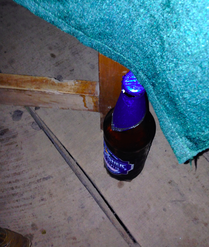
The few tourist restaurants that serve beers have to do so clandestinely, so they’ll sell you a liter bottle and then pour a bit into a coffee cup and hide the bottle under your table.

I’ve only had three beers I think in three weeks here. I had two small glasses of beer last night and I was buzzed! Hahaha. Then again, I’ve always been a lightweight.

I should read more but I’ve been watching a movie every night. I watched Bend it Like Beckham, Slum Dog Millionaire, and Million Dollar Arm while in India. Does that make me a racist? Or just a cultural retard?

You take off your shoes before you enter any shop, home, or religious site. It would be extremely rude and disrespectful to do otherwise. 

Picture
I’m frequenting the class of accommodations that involves a hard wood cot with a thin foam “mattress,” one rock hard pillow, and sheets with blood on them from previous residents’ battles with mosquitos. The rooms have a ceiling fan and a dingy bathroom with a bucket. This costs me an average of $8 a night, even by the beach. The next level up is around $18-$24 a night and may include a TV, an air conditioner you’re not allowed to use unless you pay an extra $10 or so, maybe a desk, and a balcony or bigger windows on the second or third floor.

Bathrooms have a drain in the floor so there are no shower pans in most countries. The shower falls right into the room and then the floor just drains. Good system, actually.

I bought a mango ice cream the other day and walked about ten steps with it when a little poor Indian kid asked me if I’d buy him ice cream, so I just handed it to him without getting even a bite and walked on. Haha

They love cricket here, as well as field hockey, and football (soccer) the #3 sport. They play cricket on the beach every morning.

Picture
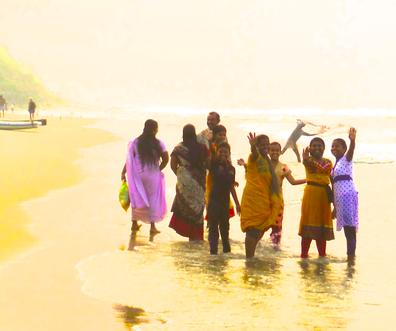
 Anywhere you go in the world, poor and common people visiting from the city go into the ocean in their clothes. Same here. Men go in with their jeans rolled up and no shirts, and women go in in their dresses or traditional sarongs with leggings or jeans on underneath.

There is nothing better than watching the joy of these people as they play in the ocean. They wade out in groups, laughing, pushing each other, holding hands in a group, and collectively yelling like they were on a roller coaster at every new wave that crashes into them. They do this for hours. It's purely golden. have seen no greater pure joy. When I close my eyes I can still hear their laughter over the windy sway of the waves.

-Norm  :-)


118 Comments

50 Bizarre and crazy facts about India.

1/13/2015

0 Comments

 
Picture
1. The air quality is so bad in the mega city of Mumbai in India that just one day outdoors is the equivalent of smoking 100 cigarettes.

2. India has far more cell phones than toilets.

3. Sex toys are still illegal in India.

4. The world's largest family unit – a man and his 39 wives and 94 children – live together in India.

5.    In one state in India, police officers are given a pay upgrade if they have moustaches. 

6.    The highest temperature ever recorded in India was 123.1 °F in Alwar, Rajasthan, while the lowest was -49 °F in Dras, Ladakh. 

Picture
7.    It rained fish from the sky one day in Jamnagar, India. No one still can knows why or understands how that’s possible

8. Elections are a massive production in India, so rife with corruption and controversy, drama and political theater that people actually come to the country to experience it, the only place in the world with an Election Tourism industry.

9. In big elections, voters' fingers are marked with a special ink to make sure they vote only once. 

10. In the parliamentary election in 2009 there it was mandated that there should be a place to vote within 2km of every single person in the country. It ended up there were 830,866 polling stations in all. According to the rule there was a polling station in the remote part of the western state of Gujarat that had a single voter, a temple caretaker.

11. There were 1,032 candidates or the Modakurichi assembly seat in the Tamil Nadu state elections in 1996, a world record for most candidates for a single constituency. 88 of those candidates did not get a single vote.

Picture
12. An Indian man claims he hasn't had anything to eat or drink in 70 years. No one has seen him do either and after running many tests doctors still can’t disprove him or figure out how it’s possible.

13. The stats about roadway fatalities in India are even more grim: 37% of all road deaths are pedestrians who were hit, 28% cyclists and motorcyclists, and 55% of all deaths occur within five minutes of the accident.

14. There’s a village in India, called Shani Shingnapur, where no houses or structures have doors and nothing is locked up. Even shops are left wide open and nothing of value is kept secured. However, there has never been a reported theft in the history of the village, and they believe they’re protected by God.

15. India actually developed a rocket and launched it into outer space. So how did the Indian Space Research Organization (ISRO) transport the rocket to the launch site? With a series of bicycles. 

Picture
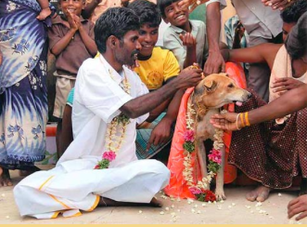
16. Call it K9 karma, because in an act of atonement, an Indian man recently got married to a dog.

17. At least 50% of the outsourced IT services in the world come from India. 

18. They wear white at funerals in India instead of black, most common in other countries.

19. India has a national obsession with breaking records. According to the Guinness Book of World Records, India ranks third behind the USA and the UK in the number of records claimed each year, though they have many other record books they fill up.

20. Cherrapunji in India is the wettest spot on earth, receiving 425 inches of rain every year, more than 5 times as much as the tropical rain forests in South America.

Picture
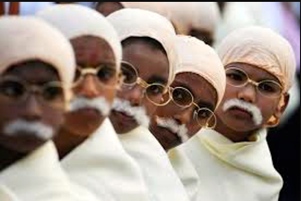
21. Some of the recent world records include the largest gathering of people (891) dressed like Mahatma Gandhi, the longest garland made of cakes of cattle dung (2 km), the longest time performing yoga on horseback (10 hours), a man who typed 103 words in 47 seconds with his nose, and the record for lighting electric bulbs by passing a wire through the nose and out of the mouth: 30 sixty-watt bulbs.
 
22. The largest current slave population in the world resides in India, with over 14 million people forced to work for no wages or against their will every day.

23. The city of Mumbai is so overpopulated and congested, that the government set out to solve the problem by building a second, parallel city right next to it. Navi Mumbai was developed in 1972 and remains the largest planned township in the history of the world.

24. One Indian family has 31 doctors in in it. Known as “the doctor family”, they have 7 physicians, 5 gynecologists, 3 ophthalmologists, 3 ENT specialists, psychiatrists, pathologists, neurologists, an orthopedist and one urologist.

Picture
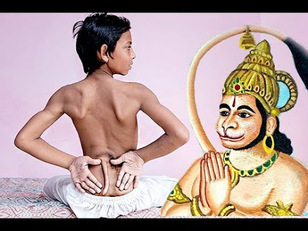
25. A 13-year old boy named Arshid Ali Khan from the Punjab state in India is worshiped as a god, probably because he has a 7-inch long tail, resembling a Hindu God. Local people revere him as holy and take come to him for blessings to cure their ailments.

26. The Indian roadways are notorious for being crazy and dangerous. In fact, there are an average of 2000,000 reported road deaths every year in India, the most in the world.

27. India has the most vegetarians of anywhere in the world.

28. Most Indians still eat the traditional way, with their fingers and the help of bread-like rotis or chapattis to scoop the food up.

29. India has the world’s largest Montessori school, with over 26,000 students in one location.

30. 61% of school children in India have germs or bacteria on their hands that can cause serious diseases.

Picture
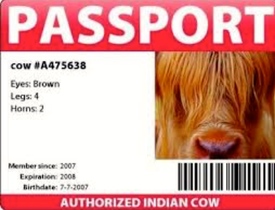
31. In a part of India called West Bengal, cows are required to have their own photo ID cards.

32. It's illegal to carry Indian currency (Rupees) out of the country.

33. The Kumbh Mela Festival is the world's biggest gathering, with over 100 million people in attendance every time it commences.

34. The typical person in India would have to work at least 6 hours just to buy a McDonalds Big Mac.

35. India is home to the most languages in the world. The 1961 census of India documented 1,652 languages in use in the country at that time.

36. There are more than one million Indian millionaires, behind only the U.S., Japan, and about tied with China.

Picture
37. Indian Railways is a massive operation, with at least 1.4 million employees, more than the population of many small countries like Trinidad and Tobago, Estonia, Luxembourg, Iceland, Monaco, and several others.

38. India is home to the largest film production industry in the world, with more than 1,100 movies made each year. That’s slightly ahead of Nigeria, twice as many as the U.S., and ten times the amount of films made in Britain.

39. You’ve heard of the Great Wall of China, but did you know there is a Great Wall of India? Kumbhalgarh Fort in Rajasthan has a wall that goes on for 36 km, the second longest in the world behind only the one in China.

40. There is a special post office in India where you can send letters to God, open for business only three months during pilgrimages and religious festivals. Most of the letters they receive ask for blessings for weddings or business openings, though they do receive a large amount of wallets that thieves lift, remove the cash, and return the wallet to the "God post office" as atonement.

Picture
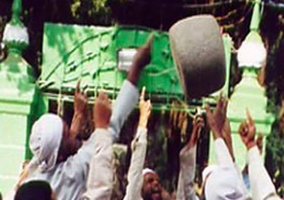
41. Legend has it that the famous Levitating Stone of Qamar Ali Darvesh in Shivapur, India can be lifted with only 11 fingertips if you shout the name “Qamar Ali Darvesh!” as you lift. By the way, the stone weighs 200 kg.

42. India was the only place on earth diamonds were officially found until 1986, when they were discovered in Africa and several other countries. 

43. Despite it’s huge landmass, all of India is in one time zone. But it does differ from a ½ hour from neighboring countries and international time standards, making things complicated. So when it’s 6:30pm in India it’s 8am in New York.

44. Complicated surgeries and operations were performed over 2,600 years ago in India.

Picture
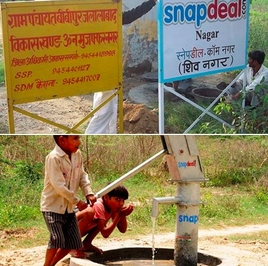
45. A village in northern India is called Snapdeal.com Nagar. The village, previously named Shiv Nagar, officially changed its name to Snapdeal.com Nagar in exchange for the e-commerce website installing 15 hand water pumps for the villagers.

46. The Kodinhi village in the southern state of Kerala is known internationally as “Twin Town” because it produces such an alarming rate of twins.

47. We know that Indian people love animals, but taking it one step further, there’s an elephant spa, the Punnathoor Cotta Elephant Yard Rejuvenation Centre in Kerala, where the majestic animals receive the royal treatment.

48. The Indian prime minister elect, Narendra Modi, went to the U.S. to take a three-month course on public relations and image management. It must have worked, because he was one of the most popular Indian leaders in memory.

49. An elaborate wedding in Bengaluru was called off when the bride’s family served the groom’s family chicken biryani instead of mutton biryani. Although biryani is the typical wedding dish, the lack of the correct meat source was seen as an offensive slight that led to a big fight, and the cancellation of the nuptials.

50. Since so many Indians speak English as their second language, India now has the most English speakers in the world, ahead of even the U.S. or the U.K. 


0 Comments

Second-class holy men.

1/11/2015

1 Comment

 
Picture
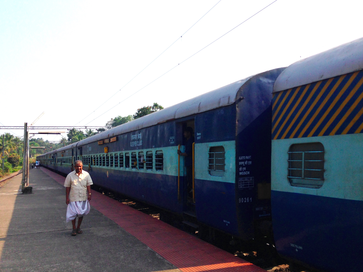
I had a train ticket heading south to Varkala, a 5-hour train ride along the Arabian Sea to the southern tip of India. I was told there were two train stations to depart Fort Cochi, where I’d stayed for a week. To go south by train, I had to go to the north station, and apparently the southern station only went north.

After some haggling with the guesthouse proprietor in Cochi (who tried to overcharge me but insisted I leave a 100% positive review on Tripadvisor) I got my bags and jumped on a tuk tuk to the train station. Although it was only 20 km to the station, it took us an hour, the driver winding down so many back streets and alleyways that I thought it must be impossible for him to actually be on route. But somehow he got us there.

The train station was beyond chaotic and I had no idea where my train was, but I managed to ask one person and have them point me in the general correct direction, allowing me to walk ten feet and then ask someone else. By this method I inched my way toward my train. On the platform I noticed a couple fellow travelers – a nice young British couple that were asking about the train to Varkala, too. So I took them under my wing and told them which train was ours. Amateurs! Even though we had seat assignments, it was impossible to decipher their system so we boarded a random car toward the front because that’s where the pointing system led us.

It was quickly confirmed that we were on the wrong car, a sleeper car. It was less quickly confirmed that I was on the wrong train, and mine was leaving 20 minutes later. Amateur!

Picture
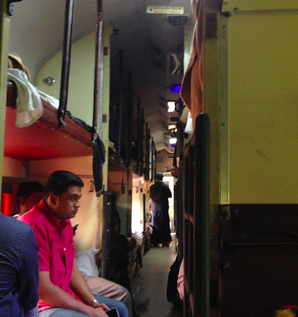
Our train car was ridiculously narrow and instead of seats they just had double padded benches bolted to the wall like bunk beds. Some people laid on these benches and slept. On others, there were whole families crowded in. Blankets and pillows were strewn on the metallic floor. There was no rhyme or reason to the seating, and when someone got up, someone else would take their bench – and their blanket. Children ran around and played and looked for their parents, who relocated when displaced without bothering to notify them.

I was surprised that our car had air conditioning. In India, it seems all amenities for tourists are separated into AC and non-AC options. Electricity must be pretty costly, because the AC rooms are almost double the price. Of course I make a go of it with just a ceiling fan in non-AC rooms, which wouldn’t be so bad if you could open all the windows and let the breeze in, but you have to seal the room like a tomb after dark so you won’t be ravaged by the mosquitos. Everything in India is separated into AC or non-AC and also vegetarian or non-veg.

The Britts and I shared a bench and got along swimmingly – they were EMTs from southern England taking a two-week holiday in India. We talked about travel and books and shared the cashews and crackers we’d brought. It looked like it was going to be a pleasant trip.

Picture
A short man in a navy coat and red tie came through and checked our tickets. He was a mousy fella, with a clipboard and a mustache that struck fear into the hearts of men. As I’ve mentioned before, they love bureaucracy in India. Something about crushing the soul of a fellow human being is intoxicating to them. He checked my ticket, too, and when he saw that I was on the wrong train he grew irritated.

“No, no, NO! You get off next station and wait for your train.”

“Are you going to slow down at least or should I just jump?” I asked him. He was not amused.  He told me the next stop was in about 40 minutes and ordered me to de-board there.

“Are you serious dude? Can’t I just stay on this one? What’s the difference?” Yes, he was serious, and no, he did not like being called “dude”; I could tell by the way his mustache quivered like flags on a battlefield. “Or can’t I just pay you extra to stay on this train?”

This got the little mouse-man’s attention. For those of you playing along at home, this is called “a bribe” and it’s the only way shit gets done in 90% of the world. He looked at my ticket again and scribbled furiously on his clipboard, then presented a number: 900 Rupees. Of course that was a ridiculous sum, as I had only paid 460 Rupees (about $7.50) for my original train ticket. But the insignificant man had the upper hand and he knew it, so I surrendered by waving my white ticket.

I collected my things and waited by the train door, which are all wide open as the train rattles through the jungle just in case anyone wants to accidentally fall out or not-so-accidentally push a loved one out or even jump to their death because they’re having a bad day, all of which would free up a seat.

As I waited, I chatted with some nice men who went in and out of the train’s only bathroom. When the door was ajar I saw it was just a hole in the ground with a bucket of water.

“Go now if you have to,” the men told me. “Because you shouldn’t go when the train is standing still at the station.”  Apparently, the bathroom hole led right down to the ground.

The next stop came up in 20 minutes. 

“Yes, but it is a local stop, not your stop,” the nice Indian men told me. “You want the next next stop to wait for your train.”

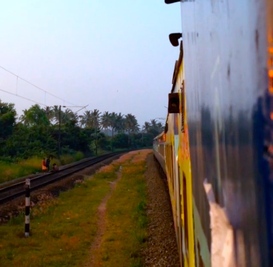
But there was something blocking the track a ways ahead so we ended up having to wait. Everyone got off our car and milled on the platform. There was nothing but jungle and people and a Christian college with yellow walls watching from the top of a hill, like a man in a big hat looking down disapprovingly. 

Picture
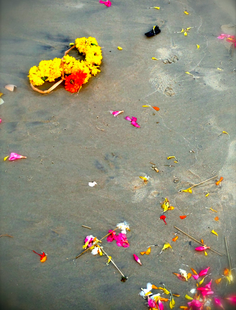
As we waited, the other cars spilled open and their passengers streamed out like ants from a rotten mango. I saw there were sleeper cards, 1st class cars, and finally 2nd class cars for the commoners, and these were mostly men wearing only the traditional wrap-around loincloths. They were decorated with colorful paint on their foreheads and wreaths of flowers. They wore no shoes and carried everything they owned in bundles on their heads. Someone told me there was a big religious ceremony being held at a temple in the south, so they were all holy men on a pilgrimage. They all had beards that grew sideways and the warmest smiling eyes. Everywhere they walked, yellow, pink, and white flower pedals were scattered on the ground.

It was hot on the track so we pressed into the train’s shade. The jovial men from my car surrounded me and asked me questions where I’m from and where I’m going. They wanted to take photos with me but the didn’t have cameras so they asked for my phone and snapped photos of us with my camera, though I still don’t understand how that benefits them. They laughed that I sweated. I told them my dilemma with the wrong train and the hostile ticket checker and they just brushed it off and said, “Don’t worry. You don’t have to get off.” One official in a pressed white shirt emerged from the crowd and checked my ticket and confirmed I could stay.

There was no announcement when we were ready to go, the train just started moving. The ants sprinted and pushed and jumped to get back into the mango. I was the last one on the track and the doorway was filled with standing men, so I had to jump, too, and hang on for dear life on the outside and hope I didn’t get hit by a tree or a sign until the aisle cleared and I could climb inside.

I settled into the sleeper car with my British friends and we started watching a bad kung fu movie on my laptop. Genghis Kahn soon came around and look horrified that I was still on his train. I told him that it was ok because the other official in the white shirt told me I could stay. He informed me there is no other official, and now I really needed to get off the train at the next stop. He said it would be about an hour.

In twenty minutes the train stopped at a station and the little terrible man came around and yelled at me to get off immediately. I tried to collect my things and pack up my computer quickly, but I was in a panic. Nuts went flying everywhere. They were just cashews, luckily – not my own. The train started moving again and the terrible man yelled at me and I leapt off without saying a proper goodbye to my British friends.

Picture
After a long wait in the sun, the next train did come. I got on the wrong train car again but this time people were nice. It was almost full but someone moved their backpack so I had an open seat and it even reclined. The rest of the 3-½ hour trip was pleasant, as I took out my laptop again and watched the kung fu flick with a little Indian boy and his dad looking on. I ate my lunch – crackers and Coke, which I always travel with because they help with motion sickness. There were vendors carrying all sorts of moms and masalas, dals and paneers, and chai, coffee and tea, selling them up and down the aisle so everyone could eat. It was nice. 

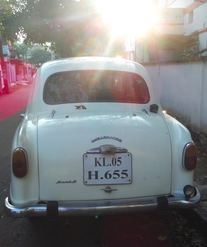
By the time we arrived in Varkala at dusk, the little boy was fast asleep and had to be carried out by his dad. Outside the station, I got in a 1950s Indian Ambassador model taxi that drove me to a homestay with peeling paint called the Green House near the sea cliffs. It was a bumpy, dusty ride but I didn’t mind: with the window rolled down, the air smelled clean and I could hear the ocean crashing below.  And at least he came to a full stop for me to get out.


1 Comment

Parents – if your kids are traveling abroad, implore them to do this ONE thing to stay safe.

9/17/2014

2 Comments

 
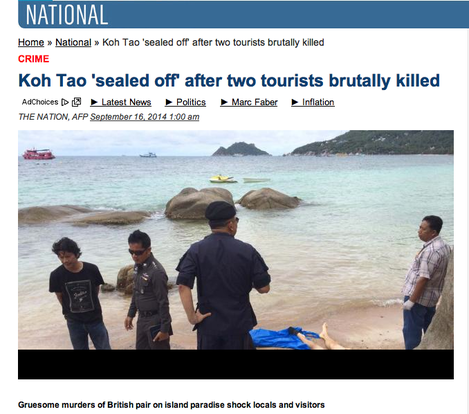
This is a quick note to parents who have kids that are traveling abroad. I feel compelled to write it after seeing the news yesterday of two young British travelers brutally murdered on the island of Koh Tao in southern Thailand.

More specifically, if you have teens, young adults, or college-aged kids who are traveling in exotic and fun places like Costa Rica, Nicaragua, Cambodia, Thailand, Mexico, etc. Please pay attention for a quick moment because this tip is fundamental to keeping them safe.

Picture
First off, please understand that your kids are going to go wild. They’re going to drink and smoke and maybe do ecstasy or MDMA or Molly or whatever crappy new drugs kids are doing these days. They’re going to dance all night and hang out with sketchy people and ride motos around without helmets and jump off of cliffs into the ocean and get bad tattoos and probably have cheap sex more often than not. 

Those are the predilections and impulses of young adults so there’s no use fighting it (and don’t pretend we didn’t do the same things - or worse.) But aside from the obvious, common sense stuff – like don’t get caught with drugs and don’t walk around loaded in dark alleys at 4am, there’s one thing you should implore them, no – plead with them, to understand. Following this advice could be the difference between life and death, as this is where the vast majority of assaults, murders, and even rapes of travelers take place:   

Stay off the beaches late at night.

Why? From what I’ve seen, (and I’ve traveled a fair bit) the vast majority of serious harm towards foreigners occurs late at night on the beaches. This isn’t the kind of harm you can put a Band Aid on – this is the stuff that keeps you up at night worrying, the phone call in the middle of the night that shatters your world, your worst nightmare. Travelers – especially young travelers – are too often naïve and oblivious to their surroundings. They’re drunk and having the time of their lives with their friends, swept away in the perfect moment. They think they’re in a tropical paradise where everything is beautiful and fun, but too often completely oblivious to what’s really happening.

There are people waiting for them on the beach. Thieves and muggers and violent gangs and bad people ready to do bad things. And your kids are such easy targets, stumbling around drunk and alone in the dark. These gangs of people with bad intentions – impoverished, wild, and probably on drugs themselves – go to those area specifically because they know they’ll be drunk tourists stumbling around. They’re hunting your children. Or sometimes, robberies or attacks aren’t that orchestrated. But either way, on the beach it’s pitch black, there’s no one around, and the police or anyone who can help are so far away they might as well not exist. The romantic moonlight walk on the beach by a couple of travelers can very quickly turn into something that will ruin their lives. 

Now I’m not saying that all people are bad in these countries or something will always happen on the beach late at night. Not at all. Most people have wonderful experiences when traveling without any incident. And I’d caution people to stay aware and be safe in their home countries of United States or Canada or Australia or England as well, where these kinds of things happen nightly. I’m only compelling people to be aware of their surroundings and exercise common sense, because for some reason, travelers view the beach at night as beautiful safe havens, not dark alleys.

Of course there are times it’s perfectly safe to go onto the beach at night – when they stay within sight of the established hotels, bars, and tourist areas. And they should always go out at night or to the beach in a large group. Befriend locals. Tell people where you are going before you head out there. Leave a copy of your passport with your hotel and tell them every night where you are headed and with whom. 

Maybe I’m just being over cautious. I certainly hope so. Your kids will probably roll their eyes and dismiss your warnings as nagging parental paranoia. But show them this newspaper write up about the British kids who were just brutally slain on the beach at night in Thailand. And let them read this article I wrote about staying safe while traveling abroad. And if you think they’re still going to be reckless and foolhardy, I’ll forward you the horrific and graphic photos of those two kids. Unfortunately, someone emailed them to me. They made me sick to my stomach and kept me up all last night. 

Please hit me up if you have any other questions about traveling, as it’s definitely something I encourage that will also change their lives for the better. 

-Norm   :-)


2 Comments

The top 8 books about being incarcerated in a third world prison for drugs.

9/8/2014

10 Comments

 
Picture
I admit it’s a strange niche, but I promise you it’s also one that’s downright infectious with its readers. Then again, these are strange bunch – a hodgepodge of literate expatriates, backpackers, surfers, world travelers, and adventurers. This genre equally attracts a shadow class of readers – those who hop borders to make a buck (often by unscrupulous means, themselves,) to evade the law back home, dodge the IRS, or just live “off the grid” for when the Illuminati/zombie apocalypse goes down. 

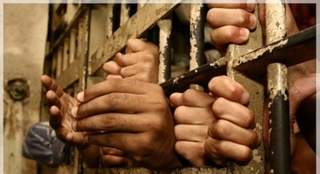
These books are about people who tried their hand at smuggling drugs, got set up as unwitting mules, or just used them recreationally, but managed to gewere pinched in the worst possible places, where human rights are a joke and survival is a daily fight. For the most part, we’re not talking about fiction. These stories are about real people who got busted for drug-related crimes far from home and did some of the hardest time imaginable. Most of them are the first to confess their guilt yet a few of them are innocent or at least defensible – though justice was never once served. In some cases, a death sentence would have been far more humane. Also worth noting, this is also not about religious or political captives or prisoners of war. These books are about private citizens who danced with the devil, got caught, and barely managed to crawl back out of hell to tell their stories.

No matter how they come about these titles, a reader rarely just picks up one. Brits, Looneys (Canadians,) Kiwis, Swedes, Frogs (sorry) – they come from every country. Cambodia, Thailand, Nicaragua, Costa Rica, South Africa, Peru; they pick up these books at hostels, battered copies at little used book stores along the backpacker circuit, or grab counterfeit copies off the street for a dollar or two. They devour them in a couple of days, while smoking fags and drinking pints in cafes or on the beach. Then, they tell their equally eclectic friends and move on to the next book in the genre. 

Maybe it's pure Schadenfreude, or perhaps we globe trotters we've all made mistakes or associated with people that could have landed us in the same situations with a bad roll of the dice. Acute fear is a strange thing - unnervingly repulsive and yet we can't bring ourselves to look away. And so is the darkness of human imagination, for I dare you to read these and not think, "What would I do if that happened to me? Would I survive?"  

Here are the top 8 books about travelers incarcerated in foreign prisons for drug offenses. I listed them by their popularity (number of reviews) on Amazon.com, and a quick bio so you know what they're all about. 


Picture
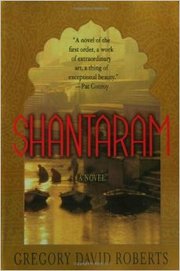
Shantaram
By Gregory David Roberts.
Note: This book garnered almost mythical intrigue among travelers, who mostly thought it was nonfiction. It turns out it's a novel, though possibly based on a true story or inspired by true events. Whatever the case, it's a wild read! 

"It took me a long time and most of the world to learn what I know about love and fate and the choices we make, but the heart of it came to me in an instant, while I was chained to a wall and being tortured." 
So begins this epic, mesmerizing first novel set in the underworld of contemporary Bombay. Shantaram is narrated by Lin, an escaped convict with a false passport who flees maximum security prison in Australia for the teeming streets of a city where he can disappear.


Picture
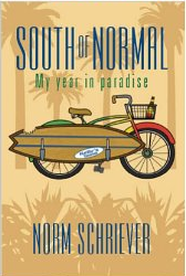
South of Normal
By Norm Schriever.

Frustrated and unfulfilled with his comfortable existence in the States, successful businessman Norm Schriever knows there is something more he is supposed to do with his life. So, he quits his job, sells and donates all of his possessions, and moves down to Tamarindo, Costa Rica, with nothing but a laptop and a surfboard, vowing to chase his long-forgotten dream of being a writer. But before he even arrives, his one and only gringo friend in Costa Rica is set up by a corrupt local attorney and thrown in a horrid local prison. Starting on his first day in town, Norm has to spend way too much "quality time" visiting his friend in that prison, where he's locked in with the other inmates. Norm soon finds that paradise has its dark side, and the perfect life in a little seaside town isn't always as easy as it seems. Whether it's adapting to the local customs and the language barrier, dodging lawless drug traffickers and corrupt cops, or helping to keep his friend alive in prison, Norm always keeps his sense of humor and forges ahead, intent on finding the paradise he has been looking for. 



Picture

Picture
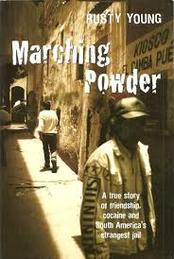
Marching Powder
By Thomas McFadden and Rusty Young.
Rusty Young was backpacking in South America when he heard about Thomas McFadden, a convicted English drug trafficker who ran tours inside Bolivia's notorious San Pedro prison. Intrigued, the young Australian journalist went to La Paz and joined one of Thomas's illegal tours. They formed an instant friendship and then became partners in an attempt to record Thomas's experiences in the jail. The result is Marching Powder.

This book establishes that San Pedro is not your average prison. Inmates are expected to buy their cells from real estate agents. Others run shops and restaurants. Women and children live with imprisoned family members. It is a place where corrupt politicians and drug lords live in luxury apartments, while the poorest prisoners are subjected to squalor and deprivation. Violence is a constant threat, and sections of San Pedro that echo with the sound of children by day house some of Bolivia's busiest cocaine laboratories by night. In San Pedro, cocaine--"Bolivian marching powder"--makes life bearable.


Picture
Mr. Nice
By Howard Marks

During the mid 1980s Howard Marks had 43 aliases, 89 phone lines, and owned 25 companies throughout the world. Whether bars, recording studios, or offshore banks, all were money laundering vehicles serving the core activity: dope dealing. Marks began to deal small amounts of hashish while doing a postgraduate philosophy course at Oxford, but soon he was moving much larger quantities. At the height of his career he was smuggling consignments of up to 50 tons from Pakistan and Thailand to America and Canada and had contact with organizations as diverse as MI6, the CIA, the IRA, and the Mafia. This is his extraordinary story.


Picture
Midnight Express
By  Billy Hayes and William Hoffer.  
Midnight Express tells the gut-wrenching true story of a young man’s incarceration and escape from a Turkish prison. A classic story of survival and human endurance, told with humor, honesty, and heart, it became the Academy Award-winning blockbuster film of the same name.

In 1970 Billy Hayes was an English major who left college in search of adventures to write about, like his hero Jack London. He had a rude awakening when he was arrested at the airport in Istanbul trying to board a plane while carrying four pounds of hashish, and given a life sentence. After five brutal years, relentless efforts by his family to gain his release, and endless escape plotting, Hayes finally took matters into his own hands. On a dark night, in a wailing storm he began a desperate and daring escape to freedom…


Picture
The Damage Done
By Warren Fellows.

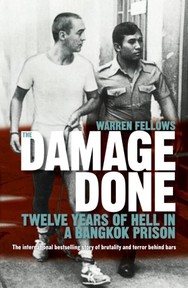
In 1978 Warren Fellows, Paul Hayward and William Sinclair were convicted of heroin trafficking between Thailand and Australia. They were sentenced to life imprisonment in Bangkok's notorious Bang Kwang men's prison, the Bangkok Hilton. For Warren Fellows, it was the beginning of twelve years of hell.

The Damage Done takes you behind the bars of a Bangkok prison. A place where sewer rats and cockroaches are the only nutritious food, where autocratic prison guards giggle as they deliver pulverising blows and where the worst punishment by far is the khun deo - solitary confinement, Thai style.


Picture
Escape    
By David McMillan. 

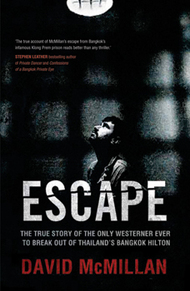
Among the 600 foreigners jailed in the 'Bangkok Hilton', one man resolves to do what no other has done: Escape. This is the true story of drug smuggler David McMillan’s perilous break-out from Thailand’s most notorious prison. After more than a year in prison and two weeks before a near-certain death sentence, McMillan escapes, never to be seen in Thailand again.


Picture
The Cocaine Diaries
By Jeff Farrell and Paul Keany.

'It won't happen to me. That's what I thought when I got on the plane to Venezuela. But it did - I got caught.'

Caught smuggling half a million euros' worth of cocaine, Paul Keany was sexually assaulted by Venezuelan anti-drugs officers before being sentenced to eight years in the notorious Los Teques prison outside Caracas. There he was plunged into a nightmarish world of coke-fuelled killings, gun battles, stabbings, extortion and forced hunger strikes until finally, just over two years into his sentence, he gained early parole and embarked on a daring escape from South America...


Click here for a free download of the first chapters of South of Normal!
Picture
10 Comments

Should you be worried about Ebola in the U.S.A?  Learn the facts behind the fear.

8/3/2014

1 Comment

 
Picture
The last few days, more people have expressed concern over the decision to bring two aid workers who are inflicted with the Ebola virus back to the U.S. for treatment.  Around the water cooler, there are whispers about the virus spreading here on U.S. soil.  On Facebook, people offer their opinion that we shouldn’t bring the infected man and woman back into our borders for fear of an epidemic.  There are even people prophesizing that this is the beginning of the zombie apocalypse, channeling their fear into misguided humor. 

It is scary.  This outbreak is the worst in history, killing a reported 729 people and infecting a couple thousand at last count, with no sings of slowing down.  The outbreak has gotten so bad in West African countries like Sierra Leone that the government has quarantined affected communities, saying they’ll send the police or military to enforce the medical segregation if necessary.  But like any medical outbreak or disaster, rumors and half-truths only perpetuate our fear and sometimes make the situation worse.  

So for the sake of sharing accurate information and putting your mind at ease, here are the facts about the Ebola Virus:

About the Ebola Virus.
The Ebola virus disease (EVD) is a severe, often fatal illness in humans.  It used to be called Ebola haemorrhagic fever.

It was first discovered in 1976 when two outbreaks occurred at the same time in Sudan and the Democratic Republic of Congo. The village where the outbreak occurred in Congo was near the Ebola River, where the name for the disease comes from.

EVD outbreaks have a case fatality rate of up to 90%.

There are actually 5 strains of the Ebola virus.  The strain that’s causing the current outbreak is Zaire Ebolavirus, the deadliest one.  The Ebola virus doesn’t change significantly from year to year like other viruses.  That’s the case with certain flus and SARS, which make them so much harder to identify and treat – and easier to spread. 

Picture
How many people have been sick and how many have died?
Since it first showed up in 1976, there have been more than 3,270 reported cases and more than 2,000 deaths from Ebola, according to the World Health Organization.

In this current outbreak in Africa, roughly 2,000 people have been infected and about 729 died, though the numbers are climbing daily.

What’s the survival rate?
It’s important to note that although media reports the mortality rate from Ebola cases as “up to 90%” (or a 10% survival rate,) that does not characterize the actual death toll.  Since Ebola was discovered in 1976, there has been a survival rate of roughly 30%.  The current Ebola outbreak has had a survival rate of about 40 percent, per the latest numbers from the World Health Organization.

Why is the death toll so high?
Mortality rates are so high largely because Ebola outbreaks occur in desperately poor countries and communities where there’s a lack of public health education, sanitation, and medical care.  The countries where this current outbreak took hold, Guinea, Liberia, and Sierra Leone, are among the poorest in the world, with GDP’s per capita less than Haiti.  There is almost no healthcare infrastructure for most of the people there.  Due to this, almost all the medical care for the outbreak has been provided by international Non Governmental Organizations like Doctors Without Borders, who are completely overwhelmed and lack the resources and manpower to address it.

A lack of literacy and education about disease control, cultural norms, and a mistrust of foreign aid workers have exacerbated the problem.

Picture
Where does Ebola originate?
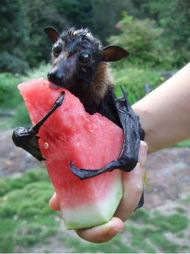
Fruit bats of the Pteropodidae family are thought to be the natural host of the Ebola virus.  From there, it infects animals and eventually humans. Outbreaks most often start in remote West African villages near tropical rainforests.

It’s documented that humans have been infected by Ebola by handling of infected chimpanzees, gorillas, fruit bats, monkeys, and other animals found ill or dead or in the rainforest.

Where are Ebola outbreaks reported?
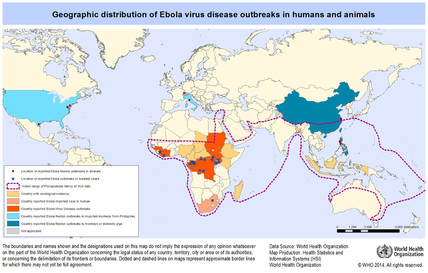
Since its inception in 1976, Ebola outbreaks have mostly occurred in poor Western African countries like Uganda, Gabon, the Democratic Republic of Congo (Zaire,) and Sudan.

It also has shown up in the Philippines and China though no deaths have been reported in those places.

How does it spread among humans?
Ebola spreads through human-to-human transmission by direct contact with bodily fluids.  Being exposed to blood, sweat, vomit, feces, semen, mucous, organs, or other bodily fluids can spread the infection.  Healthcare workers frequently have been infected because of their proximity to Ebola patients, especially in un-sterile field conditions in African villages without proper facilities or resources. 

The virus can be transmitted by even touching the bodily fluids of an Ebola patient. If an animal or patient dies, the virus stays alive on a surface for a few days, so even touching bedding, cleaning up waste, or eating infected food or drinking infected water is a danger.  In Africa, some cultures call for burial ceremonies in which mourners have direct contact with the body of the dead person, which also play a role in the transmission of Ebola.


How soon would they be sick and infectious?
Typically, symptoms appear 8-10 days after exposure to the virus, but the incubation period can span two to 21 days.  People usually aren’t infectious until the symptoms of their sickness emerge. 

What are the symptoms?
People usually start with a high fever, aches, acute weakness, headache, rashes, and sore throat.  It proceeds to vomiting, diarrhea, rash, impaired kidney and liver function, and in sometimes, both internal and external bleeding.

The problem with diagnosis is that the first symptoms also occur in ailments common to the region so before it can be confirmed as Ebola, malaria, typhoid fever, shigellosis, cholera, leptospirosis, plague, rickettsiosis, relapsing fever, meningitis, hepatitis and other viral haemorrhagic fevers have to be ruled out.

Can it be treated? 
There is no vaccine for the Ebola virus.  Several vaccines are in the testing phase but none are approved for clinical use. The only thing that can be done is to treat the symptoms Ebola causes, which include sever dehydration. 

Picture
What happened with this current Ebola outbreak?
The current deadly outbreak is in Sierra Leone, Guinea, and Liberia, the first time big Ebola cases have hit those areas.

The numbers are growing daily, but as of July 28, 2014:

In Guinea - 460 cases, 339 deaths
Liberia - 329, 156 deaths
Nigeria - one case, one death
Sierra Leone - 533 cases, 233 deaths
There has been an approximate 40% survival rate.

To respond to the medical crisis, aid workers from Doctors Without Borders, containing volunteers from all over the world, entered infected areas to treat victims and help contain the disease.

Earlier in July, Patrick Sawyer, a government official in the Liberian Ministry of Finance, died at a Nigerian hospital. He was the first American to die in what health officials refer to as “the deadliest Ebola outbreak in history."

Shortly after, Nancy Writebol, an American aid worker in Liberia, tested positive for Ebola she contracted while treating infected patients.

On July 26, Kent Brantly, medical director for Samaritan Purse's Ebola Consolidated Case Management Center in Liberia, was infected with the virus while treating patients.

On July 29, Dr. Sheik Humarr Kahn, in charge of Ebola treatment at Kenema Government Hospital in Sierra Leone, died from complications of the disease.  The next day, The Peace Corps announced their decision to remove all volunteers from Liberia, Sierra Leone, and Guinea. 

July 31, 2014 The Center for Disease Control went to Warning Level 3, advising all U.S. residents not to travel to Sierra Leone, Guinea, and Liberia unless absolutely necessary.

Picture
What are the chances of a serious Ebola outbreak in the United States?
That is almost certain not to happen. Awareness, medical treatment, and medical technology are so far ahead of conditions in African outbreak areas that any cases are sure to isolated and safely contained.  Epidemiologists would quickly track down people who exposed to the infection and make sure it can’t spread.

To cite an example, in May, the population of the Middle East was inflicted with hundreds of cases of the MERS virus.  Two infected people brought the virus to the United States but it never spread further.


Epidemiologist, doctors, and international medical professionals characterize the chance of even a small U.S. outbreak at “extremely unlikely.”

1 Comment

My year in southeast Asia in photos.

7/29/2014

2 Comments


Cambodia.

Picture
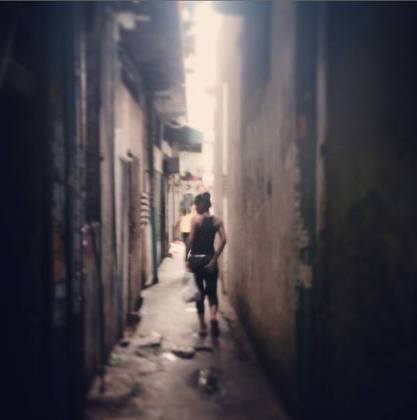
I really loved Cambodia, its chill vibe, friendly people, and balance of some of the things you like in other parts of Asia, without too much of anything.  I spent months in Phnom Penh, the capital city, and immersed myself in the local culture.  To truly get a sense of local life, I moved out of my comfortable hotel and got an apartment in a typical neighborhood.  To get there, I had to follow a maze of winding alleys, through puddles and trash and claustrophobic corners and dark staircases.  My apartment was three stories up in an attic and insanely hot - and rat infested.  Still, I enjoyed making great friends with my neighbors - the girl shown here, an old man who's wife owned a sidewalk kiosk, and the folks at the martial arts studio across the street.  This photo typifies Cambodia for me: flawed, crumbling, treacherous at times, but its humanity always illuminated by a warm light.

Picture


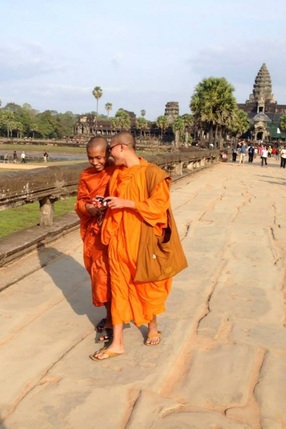
Buddhist monks laughing at Angkor Wat in Siem Reap, one of the Seven Wonders of the World.  Angkor Wat is breathtaking - the world's largest standing religious site that dates back to the 12th century.  It sits on a man-made island, perfectly square with only one km long stone bridge (shown here) across a deep moat to access it.  On the island, the temple compound sits within 3.6 km of outer walls and is a maze of temple mounts, huge galleries and courtyards built from stone, all designed to mimic Mount Meras, home to the Devas in Hindu mythology.  
Picture


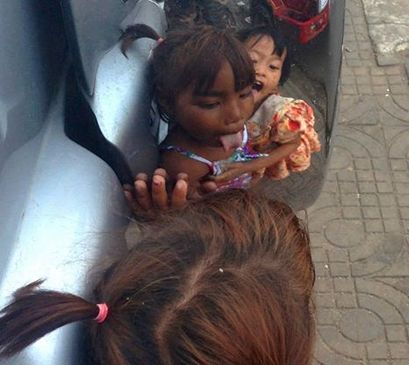
This is one of my favorite photos from the whole year because of my affinity for the children and poor folks in Cambodia.  So many kids and even whole families live on the streets, begging and eating out of the trash.  These two little girls were walking barefoot on the hot, dangerous streets, trying to sell hand-woven bracelets to tourists.  They are so poor they never owned a mirror nor saw their own image often, so they were enamored with their likeness in this car mirror.  They made faces and danced and laughed. I snuck up on them and shot a few photos before they got too self conscious and laughed before skipping away.  


The Philippines.

Picture


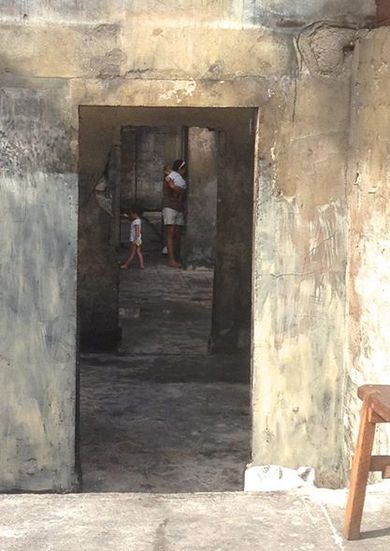
This is the best photo I took all year.  Ironically, I snapped it as an afterthought on one of my last days in Asia, in a small city a few hours north of Manila in the Philippines.  Everywhere in Asia the discrepancy between rich and poor is alarming, although not geographically segregated.  There is not better example than this photo, where this burnt-out and roofless building served as the shelter for a young mother and her two infant daughters.  Right beside them sat a 7-11 convenience story on one side and an affluent hotel on the other.  I was alarmed at the textures in this photo, their obvious tenderness despite the depth of their pain, maze of many doorways like Dante's 7 Gates to Hades.

Right after I took this, I saw the little girl hanging out in front of the 7-11 by herself, dirty and shoeless.  I bought her an ice cream and gave her a few dollars and she beamed up at me with her big smile.  There's also hope in this photo, like the open sky above them, the joy of their spirit that can not be burnt down. 

Picture


The island of Boracay in the Philippines is one of the coolest places I've ever been to on earth.  I actually visited way back in 1999 when it was just a small inhabitation of fisherman and ladyboys (and the kinky German tourists who chased them) among a mostly-untamed island.  14 years later, Boracay is far more developed, but somehow managed to keep its charm (though there are far less ladyboys and very few kinky Germans.)   It's packed with tourists, families on vacation, and beach lovers from all over the globe, but they've done a good job to manage that growth.  It's almost spotlessly clean, so safe you can walk anywhere at any time of night, and its natural beauty hasn't been diminished…despite having a Subway, McDonalds, and a Starbucks. 

Picture


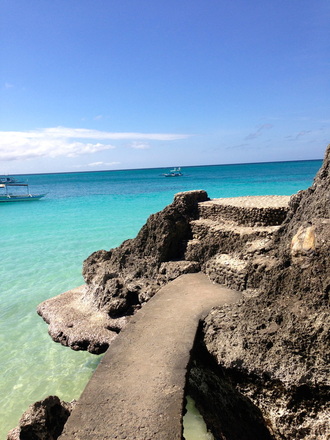
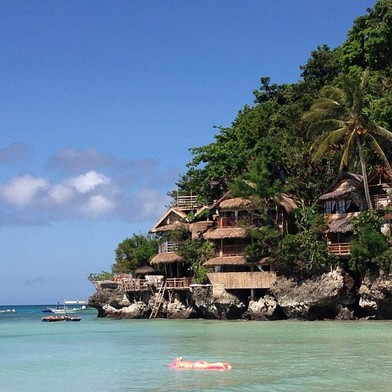
Another photo from Boracay.  On the west side of the island runs White Sand beach, a 7 km strip of immaculate…well, white sand.  It ends into a rock outcropping, but that's where the adventure just begins.  Following a narrow stone trail through the cliffs (above) you end up at majestic Diniweed beach, shown here.  It's a private beach but anyone is welcome, with only a few beach bungalows, guest houses, and restaurants built into the hill.  It's so gorgeous that I would just stand there and take it all in when I visited.


Vietnam. 

Picture


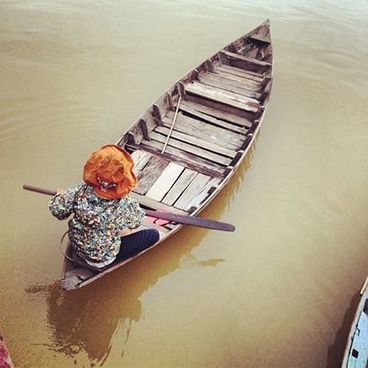
In southeast Asia, water is life.  In every country (even landlocked Laos,) the majority of the population lives along the ocean, rivers, or lakes, where they've survived off of rice farming and fishing for many centuries.  Waterways are also the traditional method of transportation, sometimes house them on floating villages - and often were a means of escape for refugees during bloody conflicts like the Vietnam War and Cambodian genocide.  

Picture


Walking through a local market one night, I happened on a wedding celebration.  I managed to snap a quick photo of the newlyweds without disturbing them.  Weddings in Vietnam and other southeast asian cultures are a huge deal - sometimes a 3-day affair!  

Picture


This is along the river in Hoi An in north central Vietnam, a charming and colorful enclave of traditional culture - and tourist hotspot.  There were plenty of boats along the river, but this particular family opened their's up to visitors every evening and sold cold beer while the father played guitar and sang to his toddler daughter.  


Thailand.

Picture


Ko Pi Pi island in Thailand.  These islands and beach were made famous when they filmed, The Beach with Leonardo DiCaprio years back.  It's stunningly beautiful, though infested with tourists.  I was sad to see trash floating around and the dipshit travelers treating it like their own party place, not giving the respect its beauty deserves.  

Picture


A giant golden statue of Buddha from a temple, or Wat, in Thailand.  There are only certain positions you'll ever find a likeness of Buddha, like sitting, standing, laying, or in the lotus pose.  


Picture


A photo from a botanical garden in Phuket, Thailand.  Phuket is the largest island in Thailand and some areas, like Patpong, look like crowded and touristy cities.  But there are still areas of the island that are serene and unspoiled by commercialization.  I spent the whole day wandering within this beautiful botanical garden, and saw only a few other people. 


Laos.

Picture

Laos is one of the most picturesque places I've ever seen.  Anywhere outside of the main city, it feels like you've been transported back in time.  I spent two weeks in Luang Prabang, a  sleepy town along the Mekong River with French Colonial architecture, ornate temples, local night markets, and incredible natural beauty.  I spent my days strolling around getting lost on purpose, armed with my camera, stopping only for a coffee, local beer, or seafood barbecue.  
Picture


Luang Prabang features parks and gardens along its river, sun-kissed and nearly deserted except for the occasional tourist or locals playing soccer or meditating.  

Picture


One day in Luang Prabang, I put on a backpack, grabbed some water, and just started walking.  I walked all the way out of town and ended up hiking up a forested mountain.  Near the top I found a path and followed it to the entrance of a tiny compound of Buddhist monks.  I walked inside and made friends with the monks, mostly children who were sent there because their families couldn't afford to feed them.  They taught me how to bow correctly and I taught them how to 'pound it out.'  

Runners up.

Picture
Boracay Island in the Philippines at sunset.
Picture
My martial arts instructor in Cambodia.
Picture
Classic car in Luang Prabang, Laos.
Picture
Colorful temple in Thailand.
2 Comments

An email from an African immigrant.

7/13/2014

3 Comments

 
Picture
I received an email from an African man last week, a gentlemen from the country of Nambia who had a few questions about moving abroad. I write a lot articles and blogs on travel and living in other countries, so he read one and reached out to me. 

I wanted to share our exchange with you. Why?

In the United States, 'immigrant' is a bad word. At least some times it is, for some people. But particularly right now in the United States, the only frame of reference most of us have with the idea of immigration is people from Mexico and Central America illegally sneaking into our borders. Or we might have a feint notion of Irish, Italian, Polish, etc. immigrants coming through Ellis Island in faded photographs.  

But the world is filled with migrants - to and from every single country, throughout every inch of the world, the ebb and flow of our existence within geography is as old as human kind, itself. In fact, borders are unnatural. We are all on the same globe, yet we draw an invisible line and call the space within "ours," almost arbitrarily - in proportion to our power, opened or shut per our convenience. The permitters of nations are like rubber bands, constricting and expanding through history as wars, refugees, famines, disputes, industry, colonization, language changes, social and cultural norms, and  even weather patterns change.  

I don't play at politics, so I'm not trying to tell you that the borders of the United States should be open to everyone, all the time. Of course that would be a disaster, and every country requires policies who can enter and who can not. I don't have the answer what that policy should be, exactly. The only thing I know is that there is a far bigger picture of immigration than the average person understands in the U.S., so I'm trying to paint the corners. Hopefully through this blog, you will be introduced to another kind of immigrant, a real person with a life journey outside you previous realm of understanding, to humanize the issue beyond headlines and political rhetoric.  

Picture
As I've travled all over the world, I've noticed a few things:

1. Every country experiences the same circumstances: people from more economically-disadvantaged countries trying to enter for jobs, safety, or a better life. And the population of every country is trying to enter another country for economic advantage. Everyone's nature is to try to move up. The United States is one of the few countries where that does not occur - our citizens don't have anywhere to go but down.

2. The vast majority of immigrants are good people who just want to work hard, take care of their families, and live happy lives. I estimate that percentage to be exactly the same as the rest of the non-immigrant population who are good people who work hard, take care of their families, and live happy lives.  

3. How can we criticize an immigrant when his country was colonized by the same people who are now denying him entry to theirs?  

4. I have been an illegal immigrant - living and conducting business in countries for periods longer than my tourist visa allows, so I have no right to judge anyone. It's not easy. There 

5. In fact, I know that if I was born into poor circumstances and had trouble putting food on the table or keeping my family safe, I'd take advantage of every opportunity to move somewhere else for a better life.

Would you?

Here is the email I received from this gentlemen from Africa, and my reply:

Picture
Hi Norm,

Im T.J. (name changed) a 30-year old black man from Namibia, Africa who is
interested in working overseas either in Canada, Germany, United Kingdom, or United Arab Emirates.

I'd like to know from you as you possess priceless information in travel as to which countries are worth the effort. I'm  looking for a country offering the following;

1) minimal racial discrimination- I was born and raised in the Apartheid era. (Namibia was colonised by the very same racist South African government after Germany lost the 2nd world war)

2) Well-paying unskilled or semi-skilled jobs. I want to earn and save as much foreign currency as possible to help shoulder some family responsibilities (check out the Namibian dollar exchange rate in comparison to £/€/$,im sure it can help paint a picture)

3) Opportunities to help forge business endeavours with foreigners while living aboard, as there are many opportunities here in Namibia which foreigners can benifit from including my own people (trying to utilize any opportunity available should i go overseas).

4) Which towns/cities one should consider living in within these countries.

I hope im making enough sense concerning the posed questions,if not please do let me know as not all info on the net is reliable regarding these countries and i need raw info and you are the main man
concerning this:)

To conclude i highly appreciate any response given regarding this matter and any extra info will be treasured thank you for your time in reading my letter Norm.

Regards,
T.J.

***

Hello T.J.;

So nice of you to reach out and say hello.  Thanks for asking that great question, and I hope I can help.  I have a little experience with those places or what I've heard, and out of those, I think Canada might be my first choice.  Of course it is cold, but from what I see there are plenty of work opportunities, they have a liberal immigration and work policy, and the economy is terrific.  Also, I understand Canada is a country with large immigrant and foreigner/non-white pockets of population, and there is far less racism that in my home country, the U.S.  Vancouver is the best city there but crazy expensive.  Toronto has the most international flavor and that may be a good place to start.  I know a lot of people who work in mining or drilling way up north and make great money - they'll work a month on and two weeks off or some schedule like that.  So it's not glamorous at all, but they make great money without advanced qualifications and it gives them some time freedom.

Germany's economy is tough right now and there is a big  anti-immigrant sentiment.  England is great and possibly my second choice, though it's very expensive and more competitive in London.  I really don't know that much about UAE.

I certainly hope that helps ! I applaud your efforts to build a better life for you and your family, and wish you the best of luck. Please keep me posted and keep in touch!

Your brother and friend,

Norm Schriever

3 Comments
<<Previous
Forward>>

    RSS Feed


      Receive a digital postcard from Norm every month:

    Yes, I want a postcard!

    Don't miss Norm's new book,
    The Queens of Dragon Town!

    See More

    Norm Schriever

    Norm Schriever is a best-selling author, expat, cultural mad scientist, and enemy of the comfort zone. He travels the globe, telling the stories of the people he finds, and hopes to make the world a little bit better place with his words.   

    Norm is a professional blogger, digital marketer for smart brands around the world,  and writes for the Huffington Post, Hotels.com, and others.

    Check out South of Normal his Amazon.com best-selling book about life as an expat in Tamarindo, Costa Rica.

    Cambodia's School of Hope explores education and empowerment in impoverished Cambodia, with 100% of sales going to that school.

    The Book Marketing Bible provides 99 essential strategies for authors and marketers.

    Pushups in the Prayer Room, is a wild, irreverent memoir about a year backpacking around the world.  

    Follow Norm on Twitter @NormSchriever or email any time to say hi!

    Categories

    All
    Advice For Writers
    Amazon
    American Exceptionalism
    Anthropology
    Asia
    Backpack
    Basketball
    Best Seller Lists
    Blogging
    Book-marketing
    Book Review
    Book Reviews
    Cambodia
    Charity
    Child-poverty
    Cloud 9
    Communications
    Costa Rica
    Crazy-asia
    Culture
    Dumaguete
    Education
    Environment
    Ethics In Writing
    Expatriate
    Favorite Song
    Festivals
    Fraternity
    Funny
    Future
    Geography
    Give A Photo
    Giveaway
    Giving Back
    Health
    Heroes
    History
    Hugo Chavez
    Human Rights
    Humor
    India
    Islands
    Itunes
    Laugh
    Maps
    Marijuana
    Martial Arts
    Memoir
    Music
    Nature
    Nicaragua
    Non Violence
    Non-violence
    Ocean
    One Love
    One-love
    Our World
    Philanthropy
    Philippines
    Population
    Positive
    Positivity
    Postcard
    Poverty
    Pura Vida
    Pushups In The Prayer Room
    Race
    Reviews
    Safety
    San Juan Del Sur
    Science
    Screenplay
    Self Publish
    Siargao
    Social Media
    Southeast-asia
    South Of Normal
    Speech
    Sri Lanka
    Story
    Surf
    Surfing
    Tamarindo
    Thailand
    The Philippines
    The-queens-of-dragon-town
    Tourism
    Travel
    United Nations
    Venezuela
    Work From The Beach
    World Health
    Writers Forum
    Writing
    Writing Forum
    Writing Your First Book

    Archives

    October 2022
    September 2022
    August 2021
    December 2020
    November 2020
    October 2020
    September 2020
    August 2020
    July 2020
    June 2020
    April 2020
    January 2020
    December 2019
    November 2019
    October 2019
    September 2019
    August 2019
    July 2019
    June 2019
    May 2019
    April 2019
    March 2019
    February 2019
    January 2019
    December 2018
    November 2018
    October 2018
    September 2018
    August 2018
    July 2018
    June 2018
    May 2018
    April 2018
    March 2018
    February 2018
    January 2018
    December 2017
    November 2017
    October 2017
    September 2017
    August 2017
    July 2017
    June 2017
    May 2017
    April 2017
    March 2017
    February 2017
    January 2017
    December 2016
    November 2016
    October 2016
    September 2016
    August 2016
    July 2016
    June 2016
    May 2016
    April 2016
    March 2016
    February 2016
    January 2016
    December 2015
    November 2015
    October 2015
    September 2015
    August 2015
    July 2015
    June 2015
    May 2015
    March 2015
    February 2015
    January 2015
    November 2014
    September 2014
    August 2014
    July 2014
    June 2014
    May 2014
    April 2014
    March 2014
    February 2014
    January 2014
    December 2013
    November 2013
    October 2013
    September 2013
    August 2013
    July 2013
    June 2013
    May 2013
    April 2013
    March 2013
    February 2013
    January 2013

Norm Schriever

Email:     [email protected]